Most grinders sold today are the same casting with a different logo on the lid, which is why so much buying advice is useless. Every listing claims sharp teeth and a smooth grind. The differences that actually affect your daily experience aren't in the product description at all, and once you know what they are, picking a good grinder takes about thirty seconds.
What separates a good herb grinder from a bad one
Four things determine whether a grinder is worth owning, and none of them appear in a spec sheet.
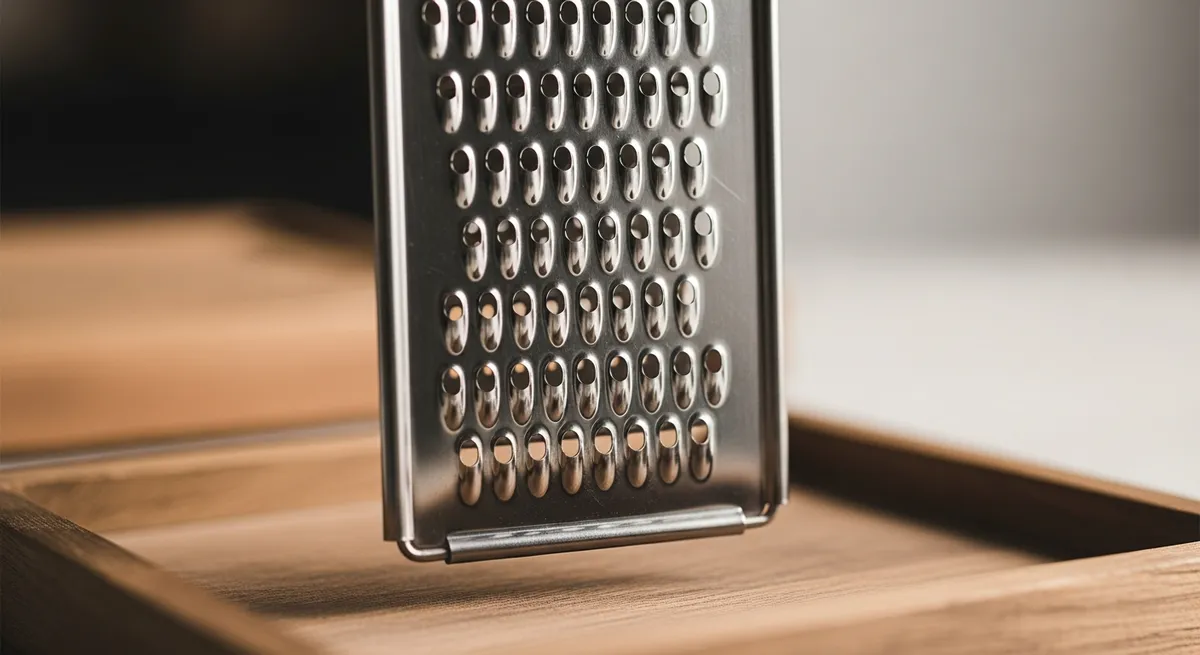
Tooth geometry matters more than tooth count. Diamond-shaped teeth cut and tear the material, producing the fluffy, even texture you want. Round peg teeth crush instead, which flattens the material and pushes moisture and oils out onto the walls of the chamber. A grinder with forty well-cut diamond teeth will outperform one with a hundred blunt pegs every time.
Thread quality separates a grinder that lasts five years from one you throw away in eight months. Cheap grinders use soft metal with shallow, roughly cut threads that gall and bind as aluminum dust works into them. Once the threads seize, the grinder is done. Deep, cleanly machined threads stay smooth even when the grinder is sticky.
Magnet strength is a small detail with an outsized effect. A weak magnet lets the lid drift as you turn it, so the teeth don't stay meshed and material escapes around the rim. A strong neodymium magnet keeps the halves aligned and stops the lid coming off in a bag.
The screen is where cheap four-piece grinders give themselves away. A proper stainless steel mesh, usually between 100 and 150 microns, separates trichomes cleanly and holds its shape. Thin aluminum screens stretch and tear within months, and once the mesh distorts you get plant matter in the kief chamber instead of kief.
2-piece vs 3-piece vs 4-piece: what you actually gain
The piece count describes how many chambers a grinder has, and each step up trades convenience against size and cost.
A two-piece is just a lid and a base. You grind, open it, and pick the material out from between the teeth. It's compact, cheap, and has nothing to break. The downside is that everything stays packed around the teeth, so getting it out is fiddly and you lose a little each time.
A three-piece adds a collection chamber underneath. Ground material falls through holes in the grinding plate and gathers in a chamber you can tip straight out. This is the format most people should own: it's barely larger than a two-piece and it solves the only real problem the two-piece has.
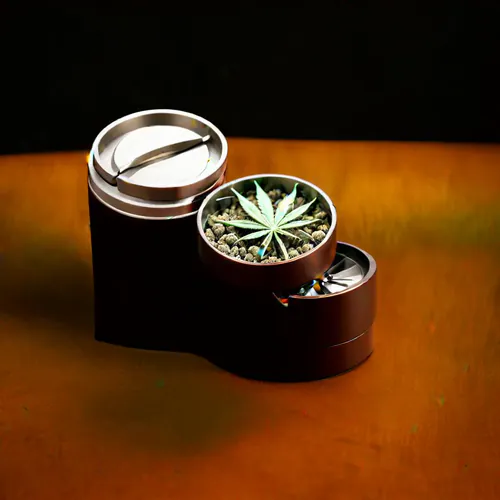
A four-piece adds a mesh screen and a kief chamber below the collection chamber. Trichomes knocked loose during grinding fall through the screen and build up over weeks into a potent powder. If you grind regularly this is a genuine bonus. If you grind occasionally, the extra height and price buy you very little, because a light user may take a year to collect a meaningful amount.
Five-piece grinders add a second screen for finer separation. Unless you're specifically collecting kief in quantity, they're more parts to clean for a difference you won't notice.
Grinder materials: aluminum, steel, zinc, wood and plastic
Material determines weight, durability, price, and how the grinder behaves once it gets sticky.
Anodized aluminum is the standard for good reason. It's light, resists corrosion, and the anodizing gives a hard surface that sticky residue doesn't bond to strongly. It also machines precisely enough for sharp teeth and clean threads. Most grinders worth owning are aircraft-grade aluminum.
Stainless steel is heavier, harder, and effectively permanent. Teeth stay sharp for years and threads don't wear. The tradeoffs are weight, which is noticeable in a pocket, and cost, since steel is harder to machine. For a grinder that lives on a table at home, steel is excellent.
Zinc alloy is what most inexpensive grinders are made from. It's heavy like steel but soft like a cheap casting, so teeth dull and threads wear quickly. It's usually die-cast rather than machined, which means looser tolerances. Zinc grinders are fine as giveaways and poor as daily drivers.
Wood grinders look good and grind badly. The teeth are usually metal pins pressed into the wood, they loosen over time, and wood absorbs oils and odors you can't fully clean out. Buy one for how it looks on a shelf, not for how it works.
Acrylic and plastic are the ones to avoid outright. The teeth are molded plastic that rounds off almost immediately, they crack when dropped, and small fragments can shed into your material. There's no situation where a plastic grinder is the right answer.
For a deeper breakdown, see our grinder materials comparison.
What size herb grinder should you buy?
Grinder diameter is measured across the lid, and the right size depends entirely on how much you process at once.
- 40 mm is pocket sized. Enough for a joint or two, disappears into a jacket, and the right call if you carry it around. The chamber is small enough that you'll refill it often at home.
- 50–55 mm is the sweet spot for most people. It handles enough material for several sessions, it's still portable, and the wider grinding surface means less effort per turn. If you're buying one grinder and aren't sure, buy this one.
- 63 mm and up is home and group territory. The leverage of a wide lid makes grinding almost effortless even when material is sticky, and the chamber holds enough for an evening with friends. Too large to carry comfortably, but excellent as the grinder that lives in a drawer.
- 75 mm+ is commercial equipment intended for processing volume, not personal use.
Matching your grind to how you actually smoke
This is the part almost no buying guide covers, and it's the part that changes your experience most. The right grind isn't a fixed setting — it depends on what you're doing with the material afterwards.
Joints and cones want a medium, even grind. Too coarse and the joint burns unevenly and canoes down one side. Too fine and the material packs dense, airflow collapses, and you end up pulling hard on something that won't draw. Four to six full turns of a sharp grinder gets you there.
Pipes and bowls want a slightly coarser grind. Pieces need to be large enough not to fall through the bowl hole, but not so tightly packed that air can't move. Three or four turns is usually enough, and you're looking for visible texture rather than powder.
Dry herb vaporizers want a fine, consistent grind. Vaporization works by surface area and even heat contact, so uniform fine material extracts far better than chunks. This is the one application where a four-piece with a good screen genuinely improves results, and where a dull grinder shows up immediately as poor vapor production.
Edibles and infusions want a coarse grind, which surprises people. Grinding too fine pushes chlorophyll and plant matter into the fat or alcohol you're infusing, which makes the final product taste green and bitter. A rough break-up gives you cleaner flavor.
If you take one thing from this section: a dull grinder can't produce a fine, even grind no matter how many times you turn it. It crushes and compresses instead of cutting, and every application above suffers for it. Our guide to grinding technique goes further on this.
Electric vs manual grinders
Electric grinders solve a specific problem rather than being a straight upgrade. Manual grinding requires grip strength and a twisting motion, which is genuinely difficult for people with arthritis, hand injuries, or reduced mobility. For those users an electric grinder isn't a luxury, it's the difference between managing on your own and needing help.
They're also faster and more repeatable. A motor applies the same force every time, so the grind is consistent in a way hand grinding never quite is, and it takes seconds rather than a minute of twisting.
The tradeoffs are real. Electric grinders need charging, they have a motor that can fail where a manual grinder has nothing to break, and they're generally bulkier. Most also don't have a kief screen. If you have full hand strength and grind small amounts, a good manual grinder will serve you better and last longer. If speed, consistency, or accessibility matter to you, the electric version earns its place — our electric herb grinder is the format we stock for exactly that reason.
Signs of a grinder that isn't worth buying
A few signals tell you a grinder isn't worth it before you ever open the box.
- Suspiciously low prices for the size. A five-dollar 63 mm grinder is zinc or plastic, and the money saved comes straight out of the teeth and threads.
- Listings that lead with tooth count rather than tooth shape are usually hiding blunt pegs behind a big number.
- "Chrome plated" or "painted" rather than anodized will chip, and once the coating flakes you're grinding against bare soft metal.
- No photos of the threads or chamber interior. Assume there's a reason.
- A friction-fit lid with no magnet will work loose in a bag, which you'll discover at the worst possible moment.
Keeping a good grinder sharp
Looking after a decent grinder is straightforward. Brush the teeth and screen every few uses with a stiff brush so residue doesn't build into a layer. Every couple of months, take it apart and soak the pieces in isopropyl alcohol for twenty minutes, scrub with an old toothbrush, rinse thoroughly with warm water, and let everything dry completely before reassembling.
Never soak wood grinders, and never put any grinder in a dishwasher. If the threads start to feel gritty, that's aluminum dust rather than residue, and a dry brush along the threads fixes it. Done consistently, a well-made grinder stays sharp for years. Our complete grinder cleaning guide walks through the full process.
Where to buy
We manufacture custom herb grinders for dispensaries, brands and events — anodized aluminum and stainless bodies, diamond teeth, real stainless screens, with your logo on the lid. If you're new to grinders entirely, start with how to use a grinder for the first time.