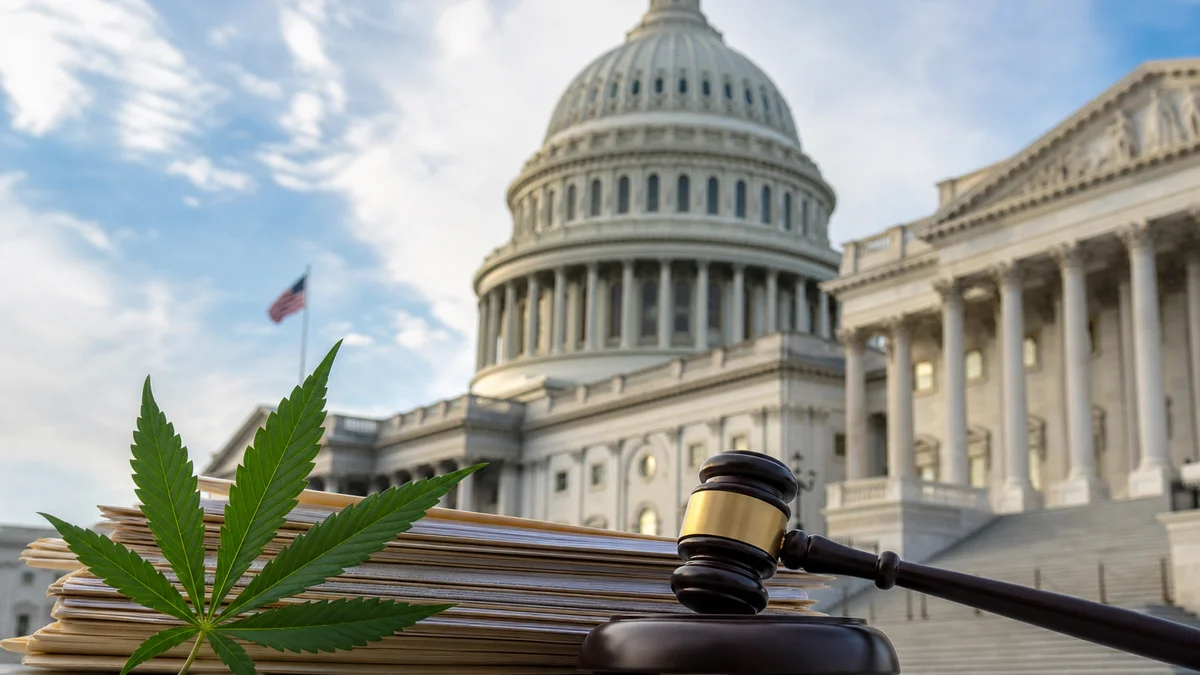
The Biden administration's proposal to move marijuana from Schedule I to Schedule III faces an uncertain future under President-elect Donald Trump, according to a legal analysis published this week.
Robert A. Mikos, a law professor at Vanderbilt University, argues that Trump has never advocated for relaxing federal controls on adult-use cannabis. The Drug Enforcement Administration wrapped up hearings on the rescheduling proposal last month, but the incoming administration could abandon the rule entirely.
"Trump himself has never called for relaxing federal controls on adult-use marijuana," Mikos wrote in an opinion piece examining the proposal's prospects.
The rescheduling process began under the Biden administration following a directive from President Biden in 2022. The Department of Health and Human Services recommended moving cannabis to Schedule III in August 2023, and DEA published a formal proposal in May 2024. The change would acknowledge marijuana's accepted medical uses while maintaining federal prohibition on recreational consumption.
Political Headwinds
Mikos points to several factors that could doom the proposal. Trump's previous statements on cannabis have focused primarily on state-level decisions rather than federal policy changes. During his first term, his administration took a hands-off approach to state-legal markets but never pursued comprehensive reform at the federal level.
The legal scholar notes that rescheduling requires significant administrative resources and political capital. A new administration typically reviews pending regulations from its predecessor, and major policy shifts often face delays or cancellation during transitions.
Industry groups have pushed for rescheduling as a way to reduce tax burdens under Section 280E of the tax code, which prohibits cannabis businesses from deducting normal operating expenses. Moving to Schedule III would eliminate this barrier for state-licensed operators.
Industry Response
Cannabis industry leaders have expressed concern about the timeline. The public comment period on DEA's proposal generated thousands of submissions from businesses, advocacy groups, and medical professionals. Many supporters argued that Schedule I classification contradicts growing scientific evidence about cannabis's medical applications.
But the regulatory process faces a January 20 deadline when the new administration takes office. Any rule not finalized by that date becomes vulnerable to reversal or indefinite delay.
Some industry observers have suggested that Trump might pursue a different approach to cannabis policy, potentially focusing on banking reform or state rights rather than rescheduling. The SAFER Banking Act, which would allow financial institutions to serve cannabis businesses, has bipartisan support but stalled in the previous Congress.
What Happens Next
DEA must still review the hearing record and public comments before issuing a final rule. That process typically takes months, making completion before the inauguration unlikely.
If the rule remains pending on January 20, the Trump administration could withdraw it, modify the proposal, or allow it to proceed. Federal agencies often freeze regulations during the first days of a new presidency while reviewing their alignment with the incoming administration's priorities.
Mikos suggests the most likely outcome is indefinite postponement rather than outright rejection. The new administration may choose to revisit cannabis policy through different mechanisms or simply maintain the status quo while focusing on other priorities.
The uncertainty leaves cannabis businesses in limbo. Companies have invested heavily in compliance systems and state licensing, but federal classification continues to create banking, tax, and interstate commerce barriers that Schedule III status would partially address.
This article is based on original reporting by www.marijuanamoment.net.