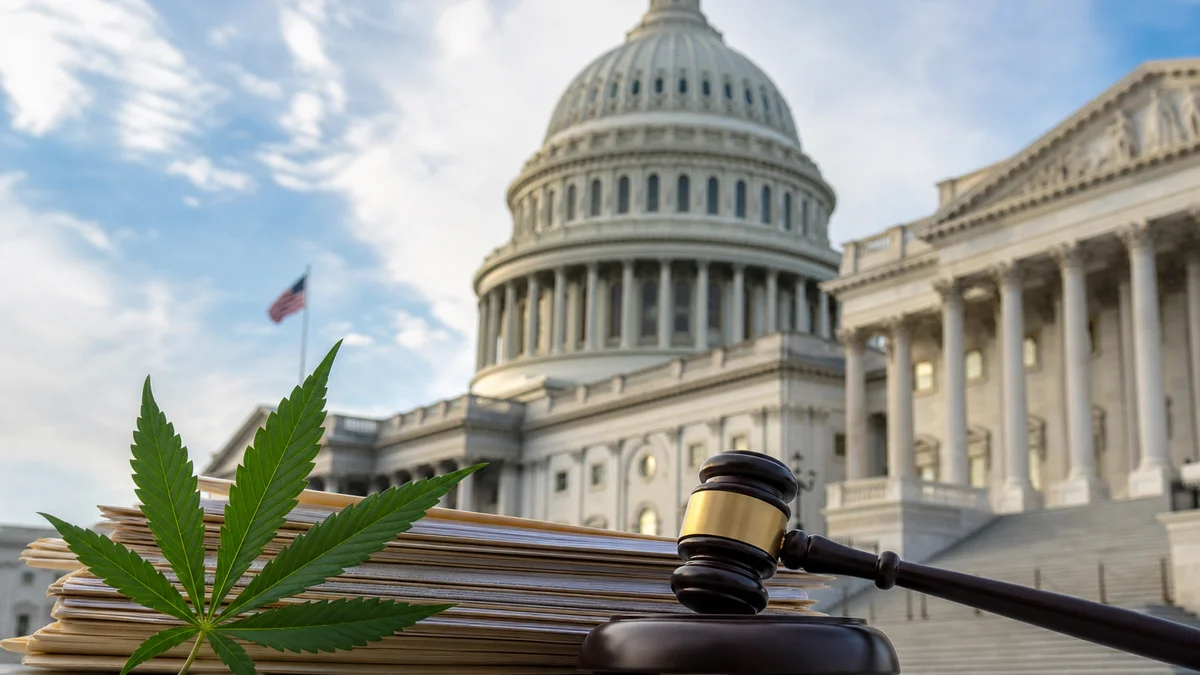
The Drug Enforcement Administration filed a comprehensive 50-page closing brief this week asking Administrative Law Judge Derek Julius to "expeditiously recommend" rescheduling marijuana from Schedule I to Schedule III.
The brief's most striking feature is its systematic dismantling of opposition witnesses. Government attorneys attacked the credibility of nearly every expert who testified against rescheduling, while simultaneously quoting those same witnesses making statements that support cannabis's medical utility.
The DEA's own pharmacologist, who testified in favor of rescheduling, appears just once in the government's brief. Yet the opposition cited her testimony 25 times in their arguments—a disparity that highlights the evidentiary challenges facing rescheduling opponents.
The Medical Use Argument
Central to the government's case is the assertion that marijuana meets the criteria for Schedule III classification under the Controlled Substances Act. Schedule III drugs have accepted medical use in treatment, moderate to low potential for physical dependence, and less abuse potential than Schedule I or II substances.
The brief methodically addresses each criterion, drawing on clinical research, FDA-approved studies, and testimony from medical professionals. It argues that the current Schedule I classification—which defines substances as having no accepted medical use—cannot be reconciled with the growing body of clinical evidence and state-level medical cannabis programs serving millions of patients.
Judge Julius also filed a transcript-correction order Thursday, suggesting active engagement with the voluminous hearing record as he prepares his recommendation to the DEA Administrator.
Witness Credibility Under Fire
The government's strategy of using opposition witnesses' own words against them represents a calculated approach to the evidentiary record. By highlighting contradictions and admissions in cross-examination, the brief seeks to undermine the scientific foundation of arguments for maintaining Schedule I status.
This tactic mirrors the government's broader argument: that even skeptics of rescheduling acknowledge marijuana's medical applications when pressed on specifics.
The opposition's heavy reliance on the DEA's pharmacologist—citing her 25 times compared to the government's single reference—suggests they found limited support elsewhere in the hearing record for maintaining the current classification.
What Happens Next
Judge Julius will review both sides' closing briefs and the full hearing transcript before issuing a recommendation to DEA Administrator Anne Milgram. While the timeline remains uncertain, the government's request for an "expeditious" recommendation signals eagerness to conclude a process that began with the Department of Health and Human Services' rescheduling recommendation in August 2023.
The judge's recommendation is not binding. Administrator Milgram will make the final determination on whether to reschedule marijuana, though judges' recommendations in administrative proceedings typically carry significant weight.
If marijuana moves to Schedule III, it would remain a controlled substance requiring prescriptions, but the change would have major implications for the cannabis industry. Companies could claim federal tax deductions under Section 280E, potentially saving billions annually. Research restrictions would ease. And the federal government would formally acknowledge what 38 states already recognize: marijuana has legitimate medical applications.
The rescheduling process has drawn intense scrutiny from multiple stakeholders. Cannabis industry groups support the move as a step toward normalization, though many advocate for complete descheduling. Some medical organizations and parent groups oppose any change, citing concerns about youth access and public health impacts.
This article is based on original reporting by hightimes.com.