Custom Printed Rolling Papers: The Low-MOQ Wholesale Guide for Dispensaries
Custom printed rolling papers are the rare merch product that's also a consumable: customers repurchase weekly, and your logo comes out at every session in between. Wholesale costs run $0.40–$1.20 per booklet depending on material and volume, supporting $1.50–$4 retail — impulse-buy pricing with 60–75% margins. Unlike a grinder someone buys once, a house-brand paper program generates recurring revenue from day one.
Starting a private-label paper program can be tough, especially when traditional paper converters require big commitments. They usually want you to order a huge amount, like thousands of units, before they'll even set up a press. But what if you're just starting out or don't need that much? This guide is here to help you get started with a private-label paper program that works for you, even if you're a small dispensary. We'll show you how to make it happen with realistic quantities, and what really matters when you're setting up your program.
Starting Small: What Low MOQ Really Looks Like
You don't have to break the bank to get custom paper products. A small initial order can be as low as 100 booklets with your branding on the cover, and it won't cost you an arm and a leg - just a few hundred dollars. This is a great way to test the waters, so to speak, and see how your customers react to your branded products. If you want a fully custom print run, with your artwork on the cover, flap, and even watermarked on the paper itself, the minimum order is 1,000 booklets. At this quantity, the cost of setting up the press is no longer the main factor, and the unit cost becomes more manageable. This way, you can get high-quality, custom paper products without having to spend $5,000 to $10,000 upfront.
Here's a sensible approach: start by testing a small batch of 100 to 500 booklets, and then use the feedback from budtenders to refine the design. Once you're happy with the design, you can scale up to larger quantities, like 2,500 or more, where you can take advantage of volume discounts. For example, ordering 10,000 booklets at once can be 30 to 40 percent cheaper per unit than ordering just 1,000, but it's best to wait until you're sure the design is working well before making a big commitment like that.
Materials: Hemp, Rice, and Unbleached Pulp
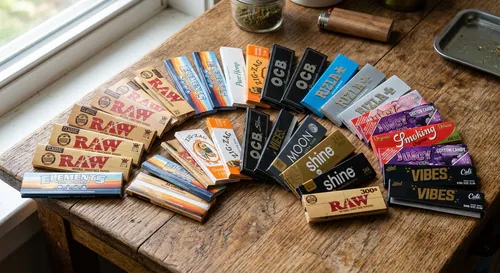
People love organic hemp, and that's why it's the best seller. RAW became the top choice because of its unbleached hemp, which burns slowly and is natural, and your customers already like it. You can buy custom hemp papers in bulk for $0.60 to $1.20 per pack, which is competitive with big brands that cost $0.80 to $1.50. Rice papers are a premium option, they're thin and don't have much taste, which some people like, and they cost $0.80 to $1.40 in bulk. Then there's unbleached wood pulp, which is the cheaper option, costing $0.40 to $0.80, but it still looks natural on store shelves.
Be honest about the house brand: it uses the same materials and is made with the same quality as the big names, but it's cheaper because there's no extra company taking a cut - and when you buy it, you're supporting the store directly.
Customization Beyond the Logo
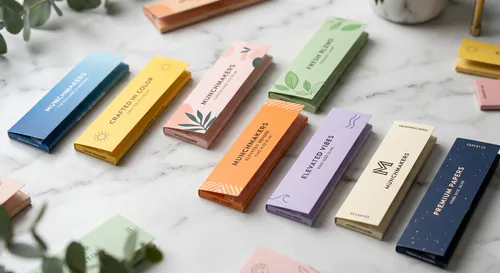
The cover of the booklet is really important - it's where you put your logo, shop name, website, and social media links. You can also add a QR code that takes customers to your menu or loyalty program, and a small note about the materials you use, like "organic hemp", to show that you care about quality. Inside the flap, you can put a discount code to encourage customers to come back. If you want to make your booklet extra special, you can add a watermark with your logo on each page, using safe ink that won't hurt anyone. This costs a bit more, around $0.30 to $0.60 per booklet, so it's probably only worth it for your premium products. You can also add printed filter tips, which are useful for customers and give you another chance to show off your brand. These cost around $0.10 to $0.25 per booklet. There are also some fancier options, like magnetic closures, embossing, or custom boxes, that can make your booklet feel really high-end. These cost between $0.20 and $0.80 per booklet, but they can help you charge a premium price of $1 to $2 more per booklet. It's all about finding the right balance between cost and quality, and making sure that your booklet reflects the values of your brand.
Pricing Against RAW
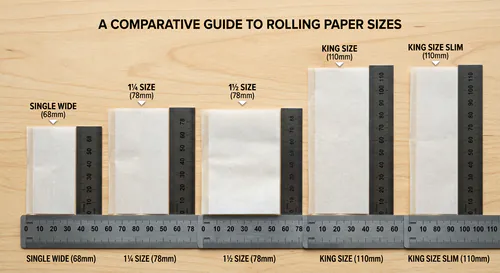
When it comes to pricing your custom hemp papers, you want to make sure you're competitive, but not so cheap that it looks like you're sacrificing quality. A good rule of thumb is to price your 1¼ booklets at $2 to $3 - this way, you're offering a bit of a discount compared to the $2.50 to $3.50 that most dispensaries charge for RAW 1¼ booklets, but you're still showing that your product is valuable. And whatever you do, don't drop your prices down to $1.50 - that's just going to make people think your papers are low-quality. As for your other sizes, just follow the usual expectations: king size can be $2.50 to $3.50, and specialty formats can go up to $4. This way, you're giving your customers a range of options without making them feel like they're getting ripped off.
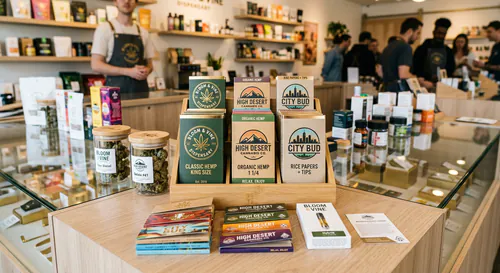
When it comes to selling products, how you display them is just as important as the price you're asking. So, instead of putting your house brand papers in a separate section, put them right next to the RAW papers. This helps to give your brand some credibility. Also, make sure your budtenders are telling customers the truth - they can say something like, "You're getting the same organic hemp, but for two dollars instead of three, and by buying from us directly, you're supporting our business." And don't be afraid to give out free samples - like a free booklet with every flower purchase. This can be a really effective way to get people to try your products, and it works better than just having a sign on the shelf talking about how great they are.
Timelines and Inventory Planning
First orders run 3–6 weeks including design and proofs; reorders run 2–3 weeks; rush is sometimes possible at a premium. Plan inventory 4–6 weeks out, and order 8–10 weeks ahead of the two demand spikes — November–December gifting and April 420 — when paper demand jumps 40–60%. Nothing hurts a young house brand like a stockout right after customers finally adopted it.
Frequently Asked Questions
What's the lowest realistic minimum for custom rolling papers?
Cover-branded stocked sizes start at 100 booklets. Fully custom print runs start at 1,000 — that's where print setup economics stop punishing the unit price.
Hemp, rice, or wood pulp for a first run?
Hemp. It's what your customers already buy by choice, and it positions your house brand against the right competitors.
Can you print on the papers themselves?
Yes — one-color watermark printing in food-safe, soy-based ink, tiled across the sheet. Best saved for premium lines.
How fast can a first order land?
3–6 weeks from artwork to delivery. Free design mockups come first, so nothing prints until you've approved the proof.