Most lighter failures happen outdoors. You're at a beach, a rooftop, a festival, a trailhead, and the standard soft-flame lighter in your pocket flickers and dies every time you try to get it going. You cup your hands, you turn away from the wind, you try seven times. This is a solved problem. Windproof lighters exist specifically for this situation, and they work.
The question is which type of windproof lighter is right for you, because not all windproof designs use the same mechanism and the differences matter in real conditions.
How windproof lighters work
Standard soft-flame lighters are vulnerable to wind because the combustion zone is open. The flame sits at the end of an exposed gas stream, and any air current disrupts the mixture of butane vapor and oxygen that combustion requires. Enough wind and the flame blows out entirely.
Windproof designs solve this in different ways depending on the mechanism.
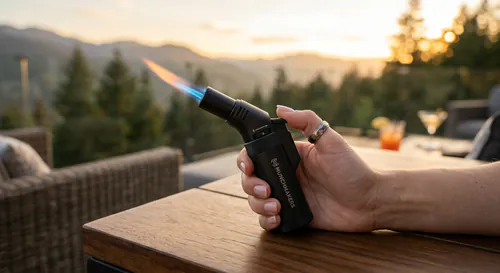
Double and triple-jet torch lighters force butane through narrow nozzles under pressure. The combustion happens in a concentrated, high-velocity stream that wind physically can't overpower at typical outdoor conditions. The blue flame of a torch lighter isn't just hotter; it's structurally resistant to disruption because of the pressure differential that creates it. A quality dual-jet torch will stay lit in winds up to 30-40 mph in my experience, which covers nearly any realistic outdoor situation.
Zippo-style chimney lighters use a different approach. The wick and flame chamber are surrounded by a perforated metal chimney that shields the combustion zone while still allowing airflow for oxygen. They're not impervious to wind the way a torch is, but they handle moderate conditions well. The tradeoff is the naphtha fuel requirement and the evaporation issue, but the windproof performance is reliable in everyday outdoor use.
Electric arc lighters (plasma lighters) don't use flame at all. Two electrodes generate a plasma arc when activated, producing enough heat to ignite materials that touch the arc. There's nothing to blow out because there's no combustion happening in open air. They're completely windproof and waterproof in most designs, though you can't use them to light a candle or anything that requires directing a flame into a recessed space. They also require USB charging and the arc is short-range. For lighting joints or cigarettes directly, they work well. For anything else, they're limited.
Coil-style electric lighters heat a metal coil to ignition temperature rather than generating an arc. Same windproof principle as plasma, same limitations around open flame. The coil glows orange and transfers heat on contact.
Wind resistance in real conditions
These categories perform differently in actual wind rather than ideal test conditions. A single-jet torch holds up to light wind but can struggle above 15 mph depending on flame angle. A dual-jet is significantly more resistant. The best triple-jet models from quality brands handle heavy outdoor conditions with no issues. Plasma arcs are effectively immune to wind. Zippo-style chimneys sit between single-jet and dual-jet in practice.
Temperature also matters in ways that marketing doesn't always mention. Below about 40°F, butane doesn't vaporize efficiently, so cold-weather outdoor use puts most butane-based windproof lighters at a disadvantage. Zippos, which use naphtha, perform better in cold conditions. Plasma lighters are temperature-resistant because they're battery-powered. If you're regularly outdoors in cold climates, this is worth factoring into your choice.
Fuel types for wind resistance
Butane (standard and triple-refined) works well for torch lighters in most conditions. Triple-refined butane matters more in torch lighters than in soft-flame designs because the nozzle precision is higher. Use the wrong butane and you'll clog the nozzle within a few refills.
Naphtha (lighter fluid) for Zippo-style designs. Ronsonol is the standard. Keep a small supply if you use a Zippo regularly because the fuel evaporates whether you use the lighter or not.
Electric lighters need only USB power. Convenient for charging on a battery pack during multi-day outdoor trips, but battery depletion in remote settings is a real consideration.
Best situations for windproof lighters
Outdoor concerts and festivals are the most common real-world use case. The combination of crowding (you can't always turn your back to the wind), constant movement, and high frequency of use makes a reliable windproof lighter notably better than fumbling with a BIC for twenty seconds.
Beach use is another obvious one. Sand and wind together are particularly hostile to soft-flame lighters. The particulate issue from sand can also clog nozzles, so a simpler mechanism (arc or coil) has some advantage over precision torch nozzles in sandy environments.
Hiking and camping. For backcountry use, most people carry dedicated fire-starting tools (lighters plus waterproof matches as backup), but a good windproof lighter is part of that kit. A plasma lighter with a full charge or a fresh-fueled torch is better than a BIC for making fire in exposed conditions.
Cigar smoking outdoors. Cigars require an even toasting that's very difficult to achieve when the flame keeps blowing out. A dual or triple-jet torch is probably the most useful outdoor tool for dedicated cigar smokers.
Windproof lighter vs regular lighter: is it worth it?
Most people don't really need a windproof lighter, and those who do probably already know it. If you smoke indoors, keep a lighter on your desk, and occasionally light a candle, a standard soft-flame lighter is perfectly fine and costs a dollar. If you're often outside, that's when the difference matters. What you're paying for with a windproof design isn't a better flame, it's a flame that works on the first try in bad conditions.
Torch lighters cost anywhere from ten to forty dollars depending on quality; a Zippo runs twenty to thirty plus fuel; a decent arc lighter lands around fifteen to twenty-five. Compared to a one-dollar disposable that works fine in still air, the value is entirely about reliability when it counts.
There's also a durability difference that gets overlooked. A disposable is a sealed unit you throw away when the butane runs out. Torch lighters, Zippos, and most arc lighters can be refilled or recharged, making them a one-time purchase that lasts years instead of weeks. Over a couple of years of regular use the windproof option usually ends up cheaper, not more expensive, and you stop generating a pile of dead plastic lighters along the way.
| Type | Wind resistance | Fuel | Cold weather | Best for |
|---|---|---|---|---|
| Single-jet torch | Good to ~15 mph | Butane | Poor below 40°F | Everyday carry |
| Dual / triple-jet torch | Excellent | Butane | Poor below 40°F | Festivals, cigars, beach |
| Zippo-style chimney | Moderate | Naphtha | Good | Cold climates, refillable EDC |
| Arc / plasma | Immune (no flame) | USB battery | Excellent | Joints, cigarettes, no refills |
How to choose the best windproof lighter for your situation
There's no one-size-fits-all answer here. The right lighter depends on where you actually use it, and sorting by environment gets you to a decision faster than reading specifications.
If you're frequently at festivals, on rooftops, or at the beach, a dual-jet torch is the sensible default. It handles strong wind, relights instantly, and is compact enough to carry without a second thought. Just be mindful of sand, which can find its way into the jets.
For cold-weather use, such as winter camping or ice fishing, skip butane and go with a Zippo or an arc lighter. Naphtha isn't affected by temperature the way butane is, and a battery is indifferent to it entirely.
If you mainly light joints, cigarettes, or bowls and you want to stop buying lighters, an arc lighter is the practical pick. It's genuinely windproof, recharges over USB, and won't leave you stranded — as long as you remember to charge it. Its weakness is reach: the arc is short, so it can't get down into a candle jar or under a cigar.
Cigar smokers should go straight to a triple-jet torch. Toasting a cigar foot evenly requires a broad, stable flame, and nothing else does that job outdoors.
For camping and backcountry trips, carry two: a torch or Zippo as your primary, and an arc lighter as backup. If one fails, you've got the other — and eventually one of them will fail.
Can you take a windproof lighter on a plane?
This trips people up constantly, and the rules are stricter than most travelers expect.
Torch lighters are the problem case. Because they burn hotter and hold pressurized fuel, they're banned from both carry-on and checked bags. It doesn't matter whether the tank is empty. If you own a nice dual-jet torch, leave it at home rather than discovering it at the checkpoint, because security will take it and you won't get it back.
Ordinary soft-flame lighters are treated differently. You're allowed one common lighter, disposable or Zippo style, in your carry-on bag or on your person. Putting a fueled lighter loose in a checked bag isn't permitted. There's a narrow exception for fueled lighters carried inside a DOT-approved case, but that's a specialty item most people won't bother with.
Arc and plasma lighters fall into a third category. They're allowed in carry-on only, never in checked baggage, because they contain a lithium battery and the same rules that keep power banks out of the hold apply here. Airlines also expect them to be protected against switching on by accident, so a model with a lid or a lock is the safer choice.
One more thing that catches people out is fuel. Butane canisters and cans of naphtha lighter fluid aren't allowed in either bag under any circumstances. Buy your refills once you land. If you're travelling with other smoking gear, our TSA rules for flying with a vape pen covers the battery side in more detail.
How to refill a windproof lighter without ruining it
Refilling a butane torch is straightforward, but skipping one step causes most of the failures people blame on the lighter itself.
Start by draining the tank. There's a small recessed valve on the base, and pressing it with a thin screwdriver or a paperclip releases leftover gas along with any air that has worked its way in. Trapped air is the single most common reason a refilled torch sputters and won't hold a flame, and almost nobody does this step.
Turn the flame adjuster to its lowest setting before refilling. Hold the lighter upside down, press the butane can firmly onto the fill valve, and give it four or five seconds — you're listening for a faint hiss and feeling a cold sensation on the metal. Once fuel starts backing out around the nozzle, the tank is full and you should stop.
Then leave it alone for two or three minutes. The butane going in is cold, and the tank needs to return to room temperature before the pressure reads correctly. Lighting it straight away produces a weak flame that makes it look like the refill failed.
Use triple-refined butane and nothing else. This matters far more in a torch than in a soft-flame lighter because the jets are precision-machined and very narrow. Cheap butane leaves residue that clogs those jets, and once a jet is blocked the lighter is effectively finished. A can of good butane costs a few dollars more and will outlast several bad ones.
Zippo-style lighters work differently. Lift the insert out of the case, pull back the felt pad, and saturate the cotton packing until it's damp rather than soaked. Overfilling means fluid seeps out and you carry the smell around on your hand for the rest of the day.
Why your windproof lighter stopped working
A windproof lighter that's stopped working can usually be fixed, and the cause is normally one of five things.
Air in the tank is the most frequent culprit and shows up right after a refill. The lighter clicks but produces no flame, or gives a weak yellow flame instead of a sharp blue one. Bleed the tank completely, wait a minute, then refill it properly.
A blocked jet is the next suspect, and it usually means cheap butane. Signs include an uneven flame, a flame that leans hard to one side, or ignition that only works at certain angles. A short blast of compressed air through the nozzle clears mild blockages. Heavy residue sometimes needs a strand of fine wire, though at that stage the lighter may not be worth saving.
Cold weather is a genuine limitation rather than a fault. Butane stops vaporizing efficiently around 40°F, so a torch that works perfectly in summer can be useless on a winter hike. Warming the lighter in an inside pocket for a few minutes usually brings it back. If you're outdoors in the cold constantly, a naphtha Zippo or a battery-powered arc lighter will serve you far better.
A dirty electrode is the one arc-lighter owners miss. A dead battery is obvious, but resin and ash also build up on the contacts, making the arc weak or stopping it bridging altogether. A cotton swab with isopropyl alcohol across both electrodes fixes it in seconds.
A worn flint or evaporated fuel covers most Zippo failures. If it sparks but won't catch, it has usually just evaporated its fuel, which happens whether you use it or not. If it's freshly fueled and still failing, the flint is worn down and needs replacing, which takes about a minute.
Custom windproof options
For brands that market to outdoor, adventure, or active lifestyle audiences, windproof lighters are a better-fit promotional product than standard soft-flame designs. The perceived utility is higher, and the lighter is more likely to be used in exactly the situations where someone would want your brand visible. A custom dual-jet torch with a good print is a memorable merchandise item in a way a standard BIC isn't for these audiences.
Our custom lighters include windproof formats, and our metal windproof lighter is a popular option for outdoor-brand custom work. For a comparison of torch versus standard flame performance, the torch lighter comparison guide covers the specifics. The complete lighter types guide is worth a read if you're deciding between multiple formats.
Ready to put a logo on one? Our personalized lighters buying guide covers styles, print methods, and bulk pricing.