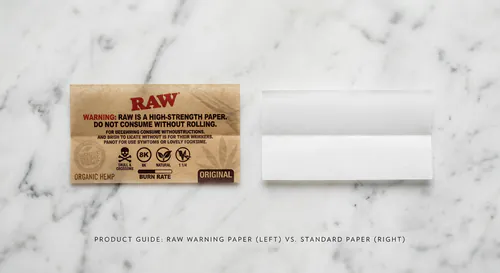
What happens when you burn paper depends entirely on what kind of paper it is. Rolling papers are made for combustion — food-safe inks, natural adhesives, safety-tested. Everything else — the warning slip in your RAW pack, receipt paper, notebook paper, magazine pages — is loaded with printing inks, thermal coatings, or sizing chemicals that release toxins when burned.
Below: what's safe, what's dangerous, and what to do if you're out of rolling papers.
What's Actually in That Warning Paper
The warning slip is printed with regular ink, which is good for reading, but it's not so great when it gets burned. This ink has bad stuff like heavy metals and things made from petroleum. The paper might also have some extra layers to stop it from getting smudgy, and maybe some glue if it's stuck to the package. When you burn this paper, all these chemicals can get released and that's not good. It's a problem because we don't want these toxic things in our air. So, it's something to think about when we're using these warning slips. We should try to be careful and not burn them if we can help it.
Compare that to actual rolling papers, which are made specifically for smoking. They use food-safe inks (if any), natural gum arabic for the adhesive strip, and go through safety testing to make sure they're as safe as possible when burned.
What Happens If You Smoke It
People who've accidentally smoked warning papers report the same thing: harsh chemical taste, immediate throat irritation, nasty coughing. Your body knows something's wrong.
Burning those inks is a bad idea because it sends volatile organic compounds and heavy metal particles right into your lungs. You might not get seriously hurt the first time, but it's just not worth the risk. There's nothing good that comes from it, and it could cause some real problems.
Why People Even Ask This Question
The warning paper is pretty much a dead ringer for the real deal - it's just as thin and looks almost identical. So, if you're a beginner at rolling or you're in a bind at 2 AM and you're all out of papers, it's easy to see why someone might think it's a good idea to use it. But, let's be real, it's not a good substitute.
But being in a pinch is a bad reason to smoke something toxic. If you're out of papers, hit a 24-hour convenience store, use a pipe, or just wait until morning. Don't smoke warning slips, receipts, notebook paper, or any other random paper.
What to Do With It
When you first open a new pack of RAW papers, take out the warning slip that's inside and get rid of it. The only reason it's there is to give you a warning, and once you've seen it, you don't need it anymore. Just keep the rolling papers themselves, that's all you need.
Other Papers People Ask About
While we're on the subject of "can I smoke this paper" — a quick rundown:
- Receipt paper: No. Contains BPA and thermal coating chemicals that are seriously toxic when burned.
- Notebook or printer paper: No. Loaded with bleach, sizing chemicals, and optical brighteners that create nasty fumes.
- Bible or dictionary paper: No. Despite what you might have heard, this paper has inks and treatments that make it unsafe.
- Parchment or baking paper: Definitely not. The silicone coating releases extremely toxic fumes when burned.
The rule is simple: if it wasn't made specifically for smoking, don't smoke it.
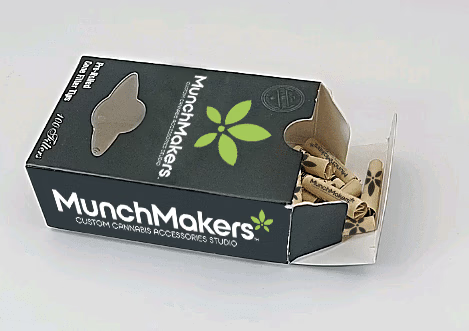
Keep Your Rolling Setup Organized
One practical way to avoid grabbing the wrong paper: keep your rolling area tidy with a proper rolling tray. When everything has its place, you're less likely to mix up a warning slip with actual papers — and you'll notice when you're running low before you're completely out.
Bottom Line
Don't smoke the RAW warning paper. Don't smoke warning slips from any brand. Don't smoke random paper materials of any kind.
Stick to actual rolling papers made for smoking. They're cheap, widely available, and designed to be as safe as possible. If someone asks you this question, give them the straight answer: throw the warning slip away and use proper rolling papers.
Out of Papers? Here's What Actually Works
The 2 AM out-of-papers problem has better solutions than burning a warning slip. In rough order of practicality: a pipe or one hitter (the zero-consumables backup every regular smoker eventually buys), a bong or bubbler if one's around, a dry herb vaporizer, or pre-rolled cones you stashed for exactly this moment. Corn husks and rose petals show up in DIY threads — they're at least plant material, but they burn unevenly and need drying; they're a novelty, not a plan.
You should never include papers that have anything extra on them, like printing, a special coating, or sticky adhesive, in your list. This means things like the warning slip that comes with a product, receipts from stores, pages from magazines, sticky notes, and even the packaging that papers come in should all be left out.
Why RAW Puts That Slip in the Pack
The slip is there for a reason - it has important information like regulatory text, messages about authenticity, and communication from the brand that can't be put on the rolling papers. This is because rolling papers are made to be free of extra ink, so they have to put this information on a separate piece of paper. It's like the packaging, not the actual product. The slip is printed with regular ink on regular paper, and it doesn't go through the same tests that rolling papers do to make sure they're safe to burn. So, you can think of it like the box that something comes in - you read it once and then you can throw it away.
Frequently Asked Questions
What happens if you accidentally smoked the warning paper?
If you accidentally get exposed to it once, it's probably not going to cause any long-term damage - you might just experience a bad taste and a bit of throat irritation. But it's still not a good idea to make a habit of it, since the inks can release some pretty nasty compounds that you don't want to be breathing in all the time.
Is the RAW warning paper the same as the rolling papers?
It may appear similar in terms of thickness, but the key difference lies in the materials used - standard printed paper with commercial inks, rather than the specialized food-safe materials and rigorous combustion testing that the actual papers undergo.
Can you roll with the RAW pack's cardboard?
The cardboard backing is actually pretty useful as a filter tip, which is a common use for it. This is because cardboard doesn't burn like paper does, so it's a good choice for this purpose. Just make sure not to roll the printed wrapping paper into the joint itself, that's not what you want to do.
Which papers are actually safe to smoke?
Only papers made for smoking: rice, hemp, or unbleached wood-pulp rolling papers with natural gum adhesive. Everything else — notebook, receipt, parchment, Bible pages — burns toxic.
Does the first paper in a fresh pack matter?
You can keep the first page of the rolling paper, it's just like the other pages in the booklet. But you should get rid of the extra slip that's on top of it.