

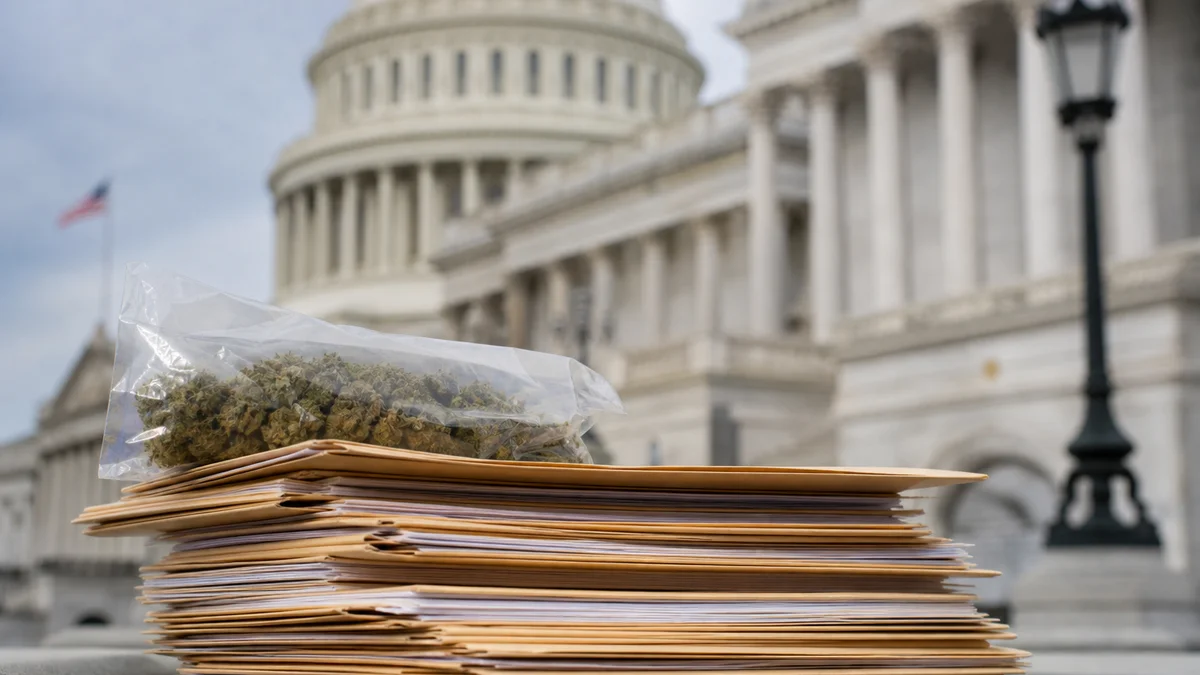
More than 200,000 Americans were arrested for marijuana possession in 2025, making up nearly a quarter of all drug-related arrests in the country even as legalization expands across multiple states.
The arrests occurred in a year when 24 states had legalized adult-use cannabis and 38 states permitted medical marijuana programs. The disconnect between state-level reform and enforcement reality highlights the uneven implementation of cannabis policy across the US.
The Arrest Data
Cannabis possession arrests represented approximately 24% of all drug-related arrests in 2025, according to the data. The figure underscores the continued enforcement of marijuana laws in states where possession remains illegal or in jurisdictions that maintain strict enforcement despite state-level legalization.
The 200,000-plus arrests come as the Biden administration has pursued federal rescheduling of marijuana from Schedule I to Schedule III under the Controlled Substances Act. That process, which began with a Department of Health and Human Services recommendation in 2023, remains under review by the Drug Enforcement Administration.
But rescheduling would not decriminalize possession at the federal level. It would primarily affect research access and tax treatment for cannabis businesses under IRS code 280E.
State-by-State Disparities
Enforcement patterns vary dramatically by state. In states without legalization programs, possession arrests continue at rates comparable to pre-reform years. Even in legal states, arrests persist for violations of possession limits, public consumption, or in jurisdictions where local law enforcement maintains zero-tolerance policies.
The arrest figures also reflect demographic disparities that have persisted despite reform efforts. Studies have consistently shown that Black Americans are arrested for marijuana possession at rates three to four times higher than white Americans, despite similar usage rates.
Industry and Advocacy Response
Cannabis industry groups have pointed to the arrest data as evidence that federal prohibition creates legal inconsistencies that harm consumers and legitimate businesses alike. The National Cannabis Industry Association and other trade groups have called for federal descheduling rather than rescheduling to address enforcement disparities.
Social equity programs in legal states were designed in part to address past enforcement harms, but expungement processes have moved slowly in many jurisdictions. Some states have automatically cleared past possession convictions, while others require individual petitions that create barriers for those with records.
What's Next
The arrest figures are likely to factor into ongoing debates over federal cannabis policy in 2026. Congressional bills for legalization and descheduling have stalled repeatedly, but advocates argue that continued arrests demonstrate the need for comprehensive reform.
Several states are expected to consider legalization measures in 2026 election cycles, which could reduce arrest numbers in future years. But without federal action, possession arrests are expected to continue in states that maintain prohibition.
This article is based on original reporting by hightimes.com.
