

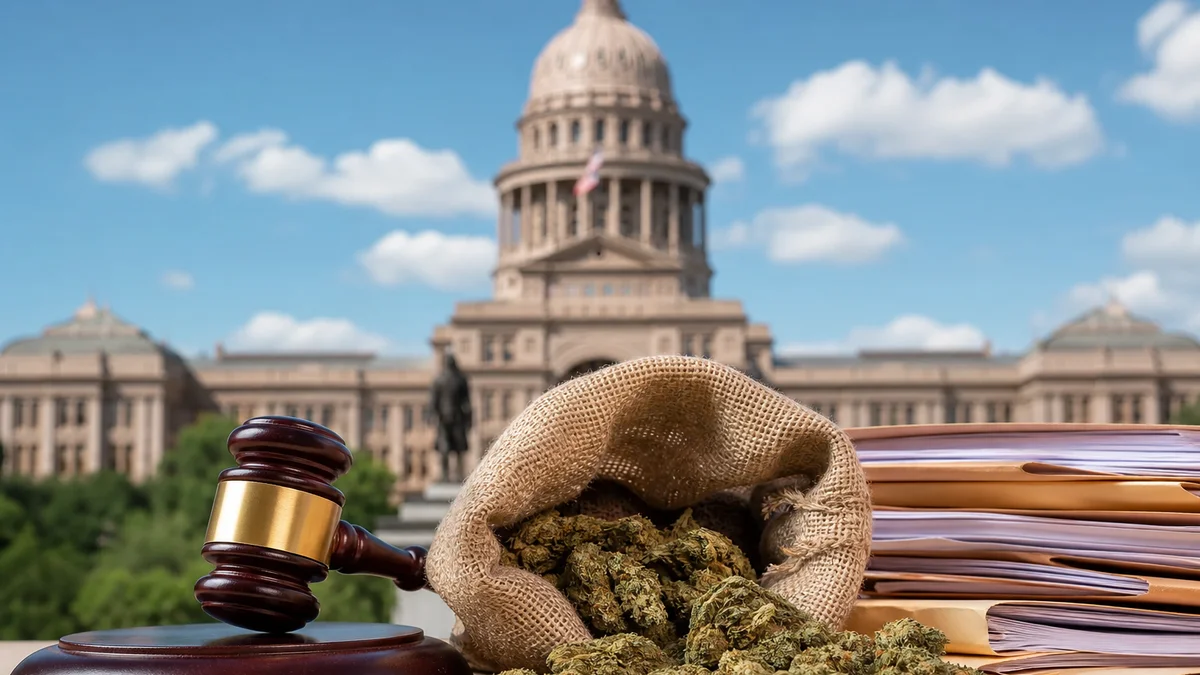
Texas began enforcing sweeping restrictions on hemp-derived THC products on July 31, marking a dramatic shift in how the state regulates substances that were legal under the 2018 Farm Bill. The new rules restore a controlled substance schedule that effectively bans many hemp products, a move critics say misallocates resources while more pressing public safety issues remain unaddressed.
Michael A. Davis, writing in an op-ed for Marijuana Moment, argues that Texas officials have elevated hemp-derived THC to crisis status despite limited evidence it poses a greater threat than other public safety concerns. "Texas can protect children and consumers without rebuilding the drug war," Davis writes.
The crackdown represents the culmination of years of political pressure from state officials who have characterized hemp-derived products as a loophole exploiting federal law. Products containing delta-8 THC, delta-10 THC, and other hemp-derived cannabinoids became widely available in Texas after the 2018 Farm Bill legalized hemp and its derivatives. But state lawmakers and regulators have pushed back, arguing these products circumvent Texas's prohibition on marijuana.
The Regulatory Shift
The July 31 deadline means retailers can no longer sell products labeled as containing hemp-derived THC without risking criminal penalties. The state's Department of State Health Services issued the new rules earlier this year, reclassifying certain hemp derivatives as controlled substances.
For businesses that built operations around hemp-derived products, the change came swiftly. Many retailers across Texas scrambled to clear inventory or reformulate products ahead of the deadline. The Texas Hemp Coalition and other industry groups have challenged the regulations, but enforcement has begun regardless.
Texas isn't alone in restricting hemp-derived THC products. At least 15 states have passed similar measures since 2021, creating a patchwork of regulations that complicate interstate commerce. But Texas's approach stands out for its severity and the rhetoric surrounding it.
Bigger Fish to Fry
Davis's op-ed highlights a tension familiar to cannabis reform advocates: states dedicating significant resources to hemp enforcement while other public safety priorities languish. Texas faces ongoing challenges with border security, violent crime in major cities, and an overwhelmed child welfare system.
The question isn't whether hemp-derived products should be regulated at all. Most industry advocates support age restrictions, testing requirements, and labeling standards. The question is whether the current approach makes sense given the state's broader needs.
Texas spent an estimated $750 million on marijuana enforcement in 2022, according to data from the Texas Department of Public Safety. That figure doesn't include the cost of prosecuting hemp-related cases under the new rules, which are expected to add to the burden on courts and jails.
What Comes Next
The hemp industry in Texas now faces a choice: adapt to the new rules, challenge them in court, or exit the market. Some manufacturers are reformulating products to comply with the stricter definitions. Others are relocating operations to states with more permissive hemp policies.
Meanwhile, consumers who relied on hemp-derived products for pain management, anxiety, or sleep have fewer legal options. Many are turning to the unregulated market or traveling to neighboring states, neither of which improves public safety.
Texas lawmakers will return to session in 2025, and hemp regulation is expected to be on the agenda again. Industry groups are pushing for a regulated framework that allows hemp-derived products with proper testing and age restrictions, similar to approaches adopted in states like Colorado and Oregon.
But for now, Texas has chosen prohibition over regulation. Whether that approach actually protects consumers or simply drives the market underground remains to be seen.
This article is based on original reporting by www.marijuanamoment.net.