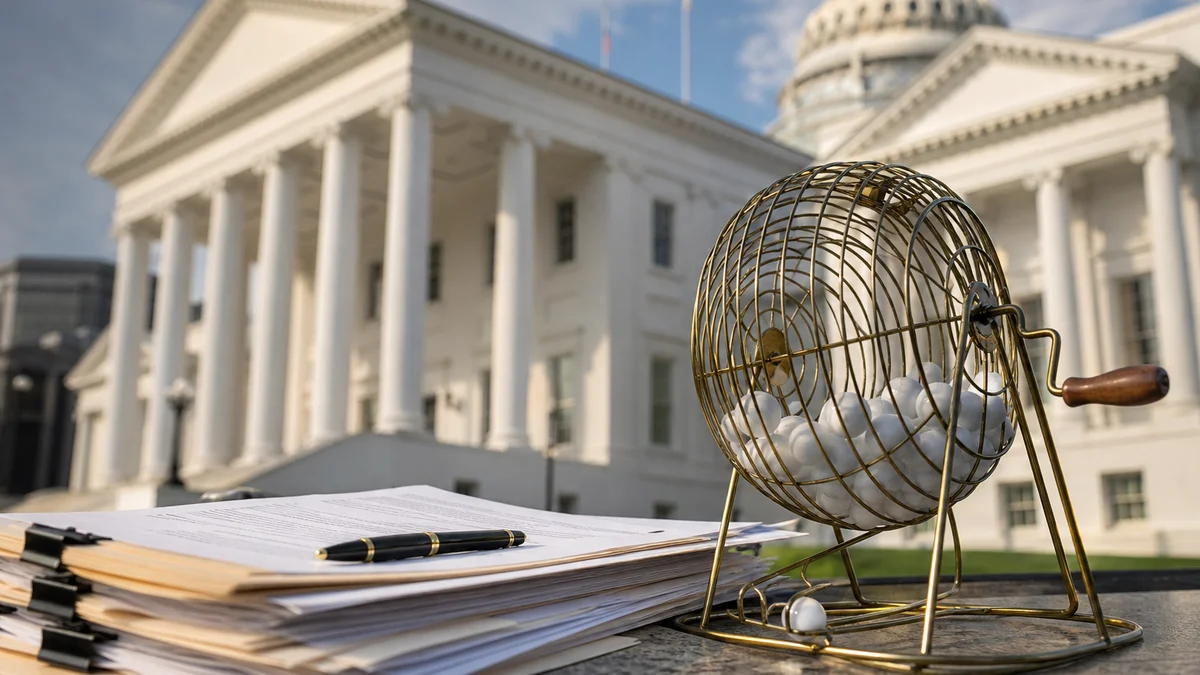



An eighth of cannabis costs $15 in Washington state but $52 in Kentucky's medical program, a 247% difference that former Massachusetts cannabis regulator Shawn Collins attributes to state-by-state market fragmentation.
Collins, who helped shape Massachusetts' cannabis regulations, used High Times' price index data to illustrate how federal prohibition forces each state to build isolated supply chains from scratch. Kentucky's limited medical program launched in January 2025 with only 48 licensed dispensaries serving the entire state.
"Bourbon doesn't have this problem," Collins wrote, pointing to how alcohol moves freely across state lines despite varying tax rates. A bottle of Kentucky bourbon costs roughly the same in Massachusetts as it does in Louisville, with only minor price variations for taxes and shipping.
The Supply Chain Problem
Every state legal market requires its own cultivation facilities, processing labs, testing infrastructure, and distribution networks. Washington's mature recreational market, which launched in 2014, has driven prices down through competition and economies of scale. The state now has over 500 licensed retailers.
Kentucky's medical program, by contrast, caps dispensary licenses and requires vertical integration in some cases. The state issued only 10 cultivator licenses initially. Collins argues these artificial scarcity measures protect existing license holders while raising costs for patients.
Medical programs in limited-license states consistently show higher prices than mature recreational markets. Illinois medical patients paid an average of $45 per eighth in 2024, while Michigan's open-license recreational market averaged $22, according to state tax data.
What Interstate Commerce Would Change
If cannabis could cross state lines legally, Collins suggests, Washington's surplus production could supply Kentucky's new market at lower prices. Oregon faced a similar surplus problem in 2019, with wholesale cannabis prices dropping to $3 per gram because producers couldn't export to neighboring states.
"The federal ban on interstate commerce means every state reinvents the wheel," Collins said. "It's economically inefficient and it hurts patients."
The SAFE Banking Act and various rescheduling proposals don't address interstate commerce. Even if the DEA moves cannabis to Schedule III, as proposed in 2024, the Controlled Substances Act would still prohibit moving it across state lines without federal distribution licenses.
Some industry advocates have pushed for an interstate compact model, similar to how some states share medical licensing reciprocity. But no state has successfully implemented cannabis interstate commerce under current federal law.
License Caps and Patient Access
Collins singled out license caps as a key driver of high prices in new markets. Kentucky's 48-dispensary limit serves a state of 4.5 million people, or roughly one dispensary per 94,000 residents. Washington has one dispensary per 14,000 residents.
New York's initial rollout capped licenses at 175 statewide, though the state later expanded that number after patient advocates complained about access issues and high prices. Adult-use sales launched in December 2022 with eighths averaging $60.
Michigan took the opposite approach, issuing licenses without caps to any applicant who met regulatory requirements. The state now has over 1,000 active retailers and some of the lowest prices in the country.
What Comes Next
The price disparity is unlikely to narrow until federal law changes or states adopt more competitive licensing models. The Congressional Research Service noted in a 2024 report that even full federal legalization wouldn't automatically enable interstate commerce without additional legislation.
Several bills introduced in the 118th Congress would address interstate commerce, including the States Reform Act, but none have advanced past committee. The cannabis industry remains fragmented into 38 separate state markets, each with its own pricing dynamics.
Collins suggested patients in high-price states should pressure regulators to issue more licenses and remove barriers to competition. "The bourbon comparison makes it clear," he said. "This is a policy choice, not an inevitability."
This article is based on original reporting by hightimes.com.