
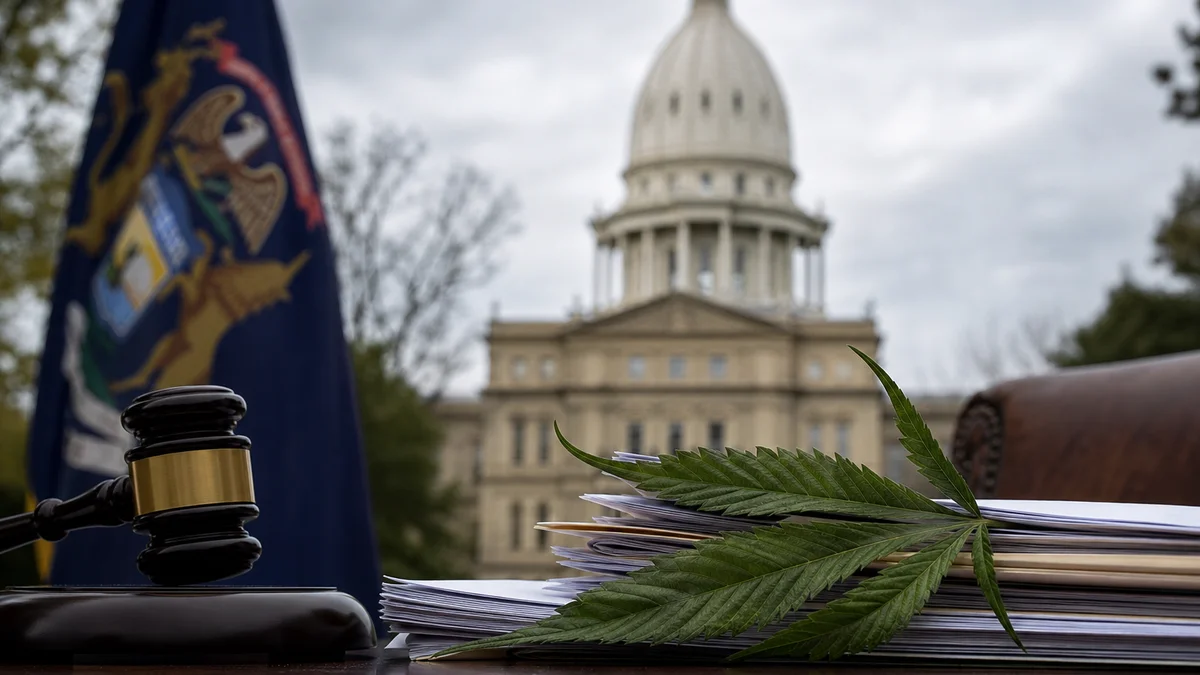
A Republican candidate for Michigan governor has accepted campaign contributions from marijuana businesses while pledging to eliminate a controversial wholesale cannabis tax that's set to take effect in 2025.
The GOP contender's Democratic opponent, meanwhile, has declined to take a firm position on the tax issue, describing it as "new and emerging" despite the policy being enacted months ago.
Michigan's wholesale cannabis tax has become a flashpoint in the gubernatorial race, exposing a divide between candidates on how to handle the state's $3 billion marijuana market. The Republican candidate has positioned himself as an ally of the cannabis industry, accepting donations from operators while promising to repeal the tax before it kicks in.
Industry Pushback
Cannabis businesses in Michigan have been vocal opponents of the wholesale tax since its passage. The levy adds a new cost layer on top of the state's existing 10% excise tax and 6% sales tax on adult-use marijuana products.
Operators argue the additional tax burden will squeeze already thin margins and push consumers back to the illicit market. Michigan's legal cannabis sales topped $2.9 billion in 2023, but the state's oversupplied market has driven wholesale prices down sharply over the past two years.
The Republican candidate's fundraising from marijuana businesses signals a pragmatic approach to an industry that's become a significant economic player in Michigan. But it also highlights the awkward politics of cannabis—an industry that's legal under state law but federally prohibited, making it difficult for politicians to navigate.
Democratic Silence
The Democratic candidate's reluctance to stake out a position has drawn criticism from both sides. Industry advocates say the "new and emerging" characterization is disingenuous given that the tax was debated and passed months ago.
Michigan legalized adult-use marijuana in 2018 via ballot measure, becoming the first Midwestern state to do so. The market has grown rapidly, with over 1,800 licensed businesses now operating across the state. The wholesale tax was added as a revenue measure, with proponents arguing it would help fund social programs.
But the timing has proven contentious. Cannabis operators are already dealing with falling prices, regulatory costs, and competition from the unlicensed market. Adding a new tax as the industry faces headwinds has united operators in opposition.
What's Next
The wholesale tax is scheduled to take effect in early 2025, giving the next governor little time to act if they choose to pursue repeal. Any legislative effort would require buy-in from the state legislature, where Democrats currently hold narrow majorities in both chambers.
The Republican candidate's pledge to eliminate the tax will test whether cannabis policy has become a wedge issue in Michigan politics—or whether other concerns will dominate the gubernatorial race. Michigan voters have consistently supported marijuana reform, but it remains unclear whether tax policy on cannabis will motivate voters.
For now, the industry is watching closely. Campaign contributions suggest operators are hedging their bets, with donations flowing to candidates who signal openness to their concerns. Whether those contributions translate to actual policy changes will depend on who wins in November and whether cannabis remains a priority once the votes are counted.
This article is based on original reporting by www.marijuanamoment.net.