

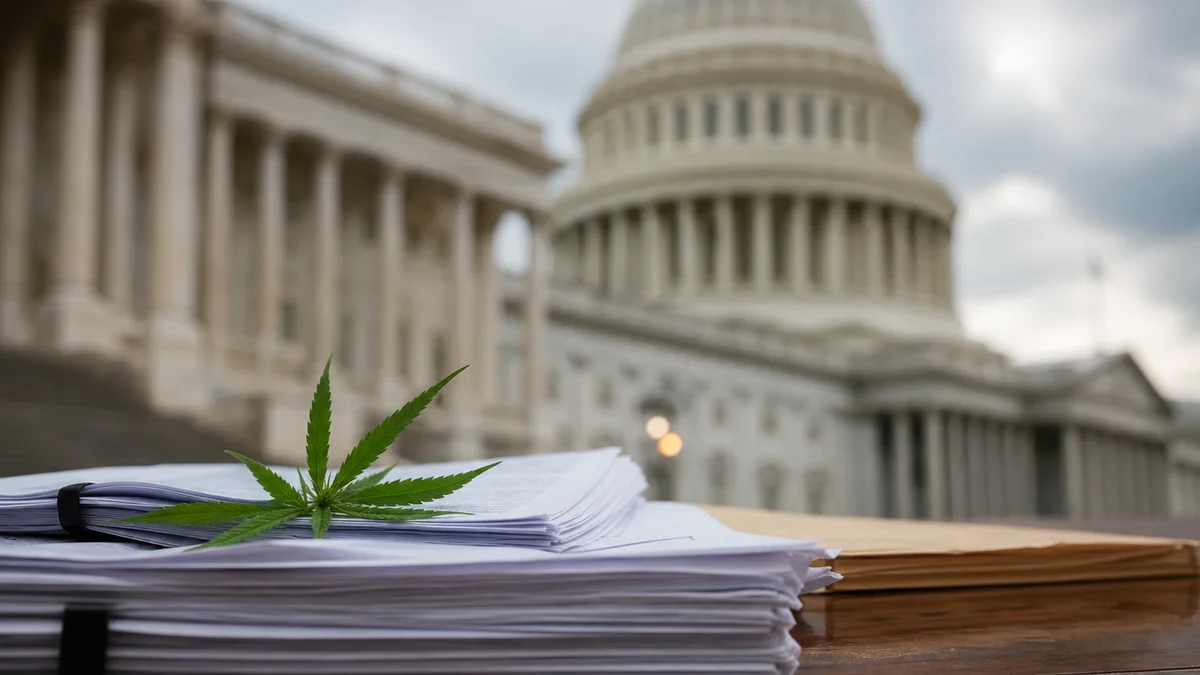
Republican lawmakers are overturning voter-approved cannabis legalization while Democrats impose tax rates that drive consumers back to illicit markets, creating a two-front assault on legal cannabis despite overwhelming public support, according to NORML's deputy director.
Paul Armentano, who leads policy analysis at the National Organization for the Reform of Marijuana Laws, pointed to recent legislative actions in at least eight states where lawmakers from both parties have either blocked or undermined voter-backed legalization measures. The pattern spans red and blue states alike.
"We're seeing a fundamental disconnect between what voters want and what legislators are willing to deliver," Armentano said in recent comments highlighting the trend.
Republican Roadblocks
In Republican-controlled states, the opposition takes a more direct form. South Dakota voters have approved legalization twice, only to see lawmakers and the governor block implementation. Nebraska faces similar resistance to its voter-approved measure, while Ohio legislators have moved to restrict the program voters authorized in 2023.
Texas lawmakers continue to ignore polling showing strong support for legalization, instead focusing on enforcement measures. Idaho remains one of the few states with no legal cannabis program of any kind, despite neighboring states generating hundreds of millions in tax revenue.
The South Dakota situation stands out as particularly stark. Voters approved recreational cannabis with 54% support in 2020, but Governor Kristi Noem successfully challenged the measure in court. When voters tried again in 2022, they failed to reach the required threshold after sustained opposition from state leadership.
Democratic Tax Hikes
But Armentano argues the threat from Democratic-controlled states may be equally damaging to legal markets, just more subtle. Michigan, Maryland, and Minnesota have all implemented or proposed tax increases that industry groups say push retail prices above illicit market rates.
Michigan's effective tax rate on cannabis products now exceeds 26% when combining state excise taxes with local fees and sales tax. Maryland's recently launched adult-use market includes a 9% excise tax on top of the 6% sales tax. Minnesota lawmakers are debating additional taxes before the state's recreational market even opens.
"High taxes don't just hurt businesses," one Michigan dispensary owner said. "They send customers right back to the same illegal dealers we were supposed to replace."
The tax issue has created measurable problems. California's illicit market still accounts for roughly 50% of all cannabis sales, according to industry estimates, largely due to tax rates that can reach 35% or higher in some jurisdictions. Illinois has seen similar patterns, with legal sales plateauing as consumers balk at total costs that can approach $80 for an eighth of flower.
The 90% Figure
The 90% support figure Armentano references comes from recent Pew Research polling showing that 88% of Americans support either medical or recreational legalization, with only 10% saying cannabis should remain fully illegal. Even among Republicans, 55% now support adult-use legalization.
That broad consensus makes the legislative resistance more notable. In most states, lawmakers face minimal political risk from supporting legalization and potentially significant risk from blocking it, particularly among younger voters who support reform at rates exceeding 70%.
Yet the pattern persists. Republican legislators cite concerns about public health and federal illegality. Democratic legislators point to revenue needs and regulatory costs. Both approaches, Armentano argues, undermine the will of voters who approved these measures specifically to create legal, regulated markets.
What's Next
The disconnect between public opinion and legislative action shows no signs of resolving quickly. Nebraska's voter-approved measure faces legal challenges similar to those that derailed South Dakota's program. Ohio's legislature continues to debate restrictions on the program voters approved. Minnesota's market launch may be delayed by ongoing tax debates.
Meanwhile, federal rescheduling efforts remain stalled, leaving states as the primary battleground for cannabis policy. The DEA's proposed move to Schedule III would not resolve the state-level conflicts Armentano describes.
Industry groups are pushing back on both fronts, challenging Republican legislative overrides in court while lobbying Democratic lawmakers to moderate tax rates. Whether either strategy succeeds may determine whether legal cannabis markets can actually displace illicit sales as intended.
The stakes extend beyond individual states. If legal markets fail due to legislative interference or excessive taxation, it undermines the case for federal legalization and leaves millions of consumers in legal limbo.
This article is based on original reporting by hightimes.com.