

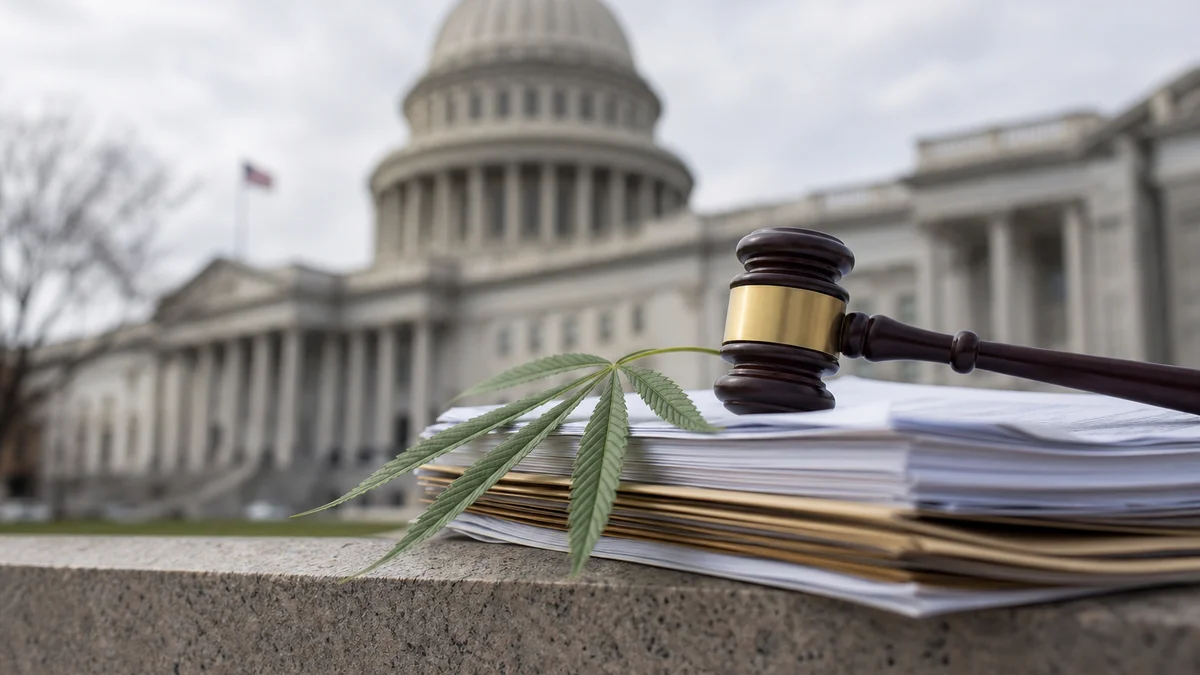
Congress has pushed the effective date of a federal ban on intoxicating hemp products to December 2025, giving the warring hemp and cannabis industries another month to battle over the regulatory future of delta-8 THC and similar compounds.
The one-month extension, tucked into a continuing resolution passed last week, marks the second delay of rules that would effectively prohibit hemp-derived intoxicating cannabinoids. But the brief reprieve has done little to cool tensions between state-licensed cannabis operators and hemp manufacturers, who now face a December deadline to either comply with new restrictions or cease operations.
"We're talking about a massive market disruption either way," said Jonathan Miller, general counsel for the U.S. Hemp Roundtable. "Thousands of small businesses are in limbo while Congress kicks the can down the road."
The Fight Over Intoxicating Hemp
The dispute centers on products derived from hemp that contain intoxicating levels of THC isomers like delta-8, delta-10, and THC-O. These products have flooded gas stations, smoke shops, and online retailers since the 2018 Farm Bill legalized hemp, creating what cannabis industry groups call an unregulated "grey market" that undercuts state-licensed dispensaries.
Cannabis trade associations have lobbied hard for the ban, arguing that intoxicating hemp products bypass state testing requirements and tax structures that legal cannabis businesses must follow. The National Cannabis Industry Association has called the hemp market "a regulatory loophole that threatens public health and legitimate cannabis businesses."
Hemp industry representatives counter that their products are legal under federal law and provide affordable access to cannabinoids in states without adult-use programs. They also point out that many hemp businesses invested heavily in manufacturing and distribution based on the 2018 Farm Bill's language.
What the Ban Would Do
The pending federal restrictions would limit total THC content in hemp products to 0.3% on a dry weight basis, measured after conversion of THCA and other precursors. That standard would effectively eliminate most intoxicating hemp products currently on the market.
Industry analysts estimate the intoxicating hemp market generated $2 billion in sales last year. A December ban could force thousands of retailers to pull products from shelves and leave manufacturers with unsellable inventory.
But enforcement remains unclear. The FDA has limited resources for inspecting hemp products, and state regulators have taken varying approaches. Some states have already banned intoxicating hemp products, while others have created separate regulatory frameworks.
Industry Groups Dig In
Both sides have ramped up lobbying efforts as the December deadline approaches. The U.S. Hemp Authority released a white paper last week arguing that "prohibition is not the answer" and calling for a regulated market that allows intoxicating hemp products with proper testing and labeling.
Cannabis industry groups fired back, with the Cannabis Trade Federation issuing a statement that accused hemp manufacturers of "deliberately creating intoxicating products to exploit a legal grey area."
"State-licensed cannabis operators pay millions in taxes and comply with strict testing requirements," said CTF spokesperson Amy Margolis. "Meanwhile, gas stations are selling unregulated THC gummies next to the beef jerky. That's not a sustainable policy."
What Happens Next
The December deadline gives both industries one more month to either reach a compromise or prepare for a regulatory showdown. Some industry observers expect Congress to grant another extension, particularly if lawmakers remain deadlocked on broader cannabis reform.
But others say the one-month delay simply postpones an inevitable reckoning. "At some point, Congress has to pick a lane," said one industry consultant who requested anonymity. "You can't have two parallel THC markets operating under completely different rules."
The hemp industry is exploring legal challenges to the ban, arguing that the restrictions exceed the FDA's authority under the Farm Bill. Cannabis groups, meanwhile, are pushing for expedited implementation and robust enforcement.
For now, intoxicating hemp products remain on shelves while retailers and manufacturers watch Washington for signals about what comes next.
This article is based on original reporting by mjbizdaily.com.