

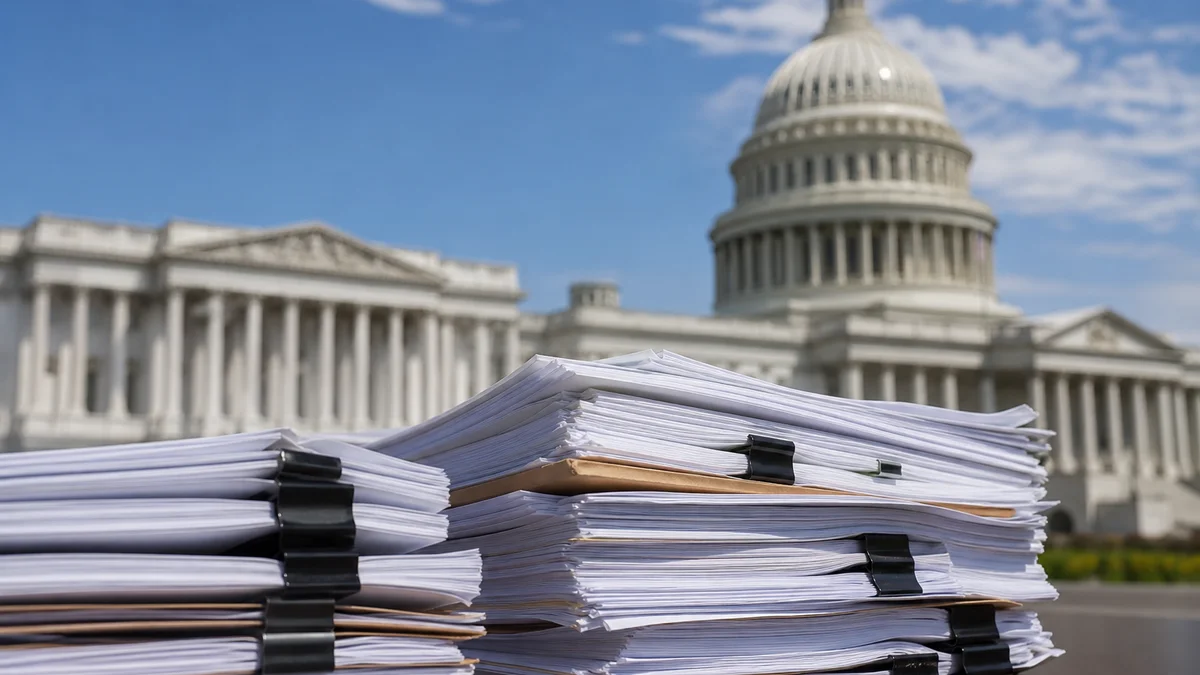
The official transcript of the DEA's marijuana rescheduling hearing needed 294 corrections before publication, including several that changed witness testimony about cannabis testing and the direction of rescheduling itself.
Judge Derek Julius ordered the corrections to the 2,533-page transcript before the DEA released the full record of the December hearing. While most corrections were minor clerical fixes, a handful altered the substance of what witnesses said under oath.
One correction involved testimony from a Tennessee investigator about THC testing discrepancies. The witness testified that cannabis shipments arrive with paperwork claiming legal delta-9 THC levels, but laboratory analysis finds much higher concentrations. For six weeks, the transcript incorrectly stated the opposite—that labs found illegal levels when paperwork claimed legal amounts.
Another correction reversed a statement about the direction of rescheduling. The error had a witness saying the opposite of their actual testimony regarding whether cannabis should move up or down the DEA's schedule of controlled substances.
The Testing Problem
The Tennessee investigator's testimony highlights ongoing enforcement challenges with hemp-derived products. Under the 2018 Farm Bill, hemp is defined as cannabis with less than 0.3% delta-9 THC by dry weight. But state investigators and law enforcement officials have repeatedly reported finding products with THC concentrations far exceeding legal limits.
This testing discrepancy has created a compliance nightmare for regulators trying to distinguish legal hemp from illegal marijuana. The issue took on added significance at the rescheduling hearing, where witnesses debated cannabis's abuse potential and medical value—two key factors in scheduling decisions.
Why Transcript Accuracy Matters
The hearing transcript forms part of the official administrative record the DEA will use to justify its final decision on rescheduling. If the agency moves cannabis from Schedule I to Schedule III, as the Biden administration has proposed, industry stakeholders could challenge that decision in court.
Any legal challenge would rely heavily on the hearing transcript. Courts reviewing DEA decisions examine whether the agency considered all relevant evidence and followed proper procedures. Errors in the record—especially ones that change witness testimony—could become ammunition for lawsuits from either side.
The corrections also raise questions about the hearing's administration. Judge Julius presided over the December proceeding, which stretched across multiple days and featured dozens of expert witnesses. The high error count suggests either rushed transcription or inadequate quality control before the initial release.
What's Next
The DEA has not announced a timeline for its final rescheduling decision. The agency must review the hearing record, consider public comments, and issue a final rule that explains its reasoning.
If the DEA moves forward with Schedule III reclassification, cannabis businesses would gain access to normal tax deductions under Section 280E of the tax code. But the plant would remain federally illegal, and the change would not resolve conflicts between state and federal law.
Industry groups are watching closely. The corrected transcript is now part of the public record, available for review by anyone interested in how the DEA reached its conclusions.
The sheer volume of corrections—294 changes across 2,533 pages—means roughly one error every nine pages. For a hearing this consequential, that rate has some cannabis attorneys concerned about what else might have been missed.
This article is based on original reporting by hightimes.com.
