

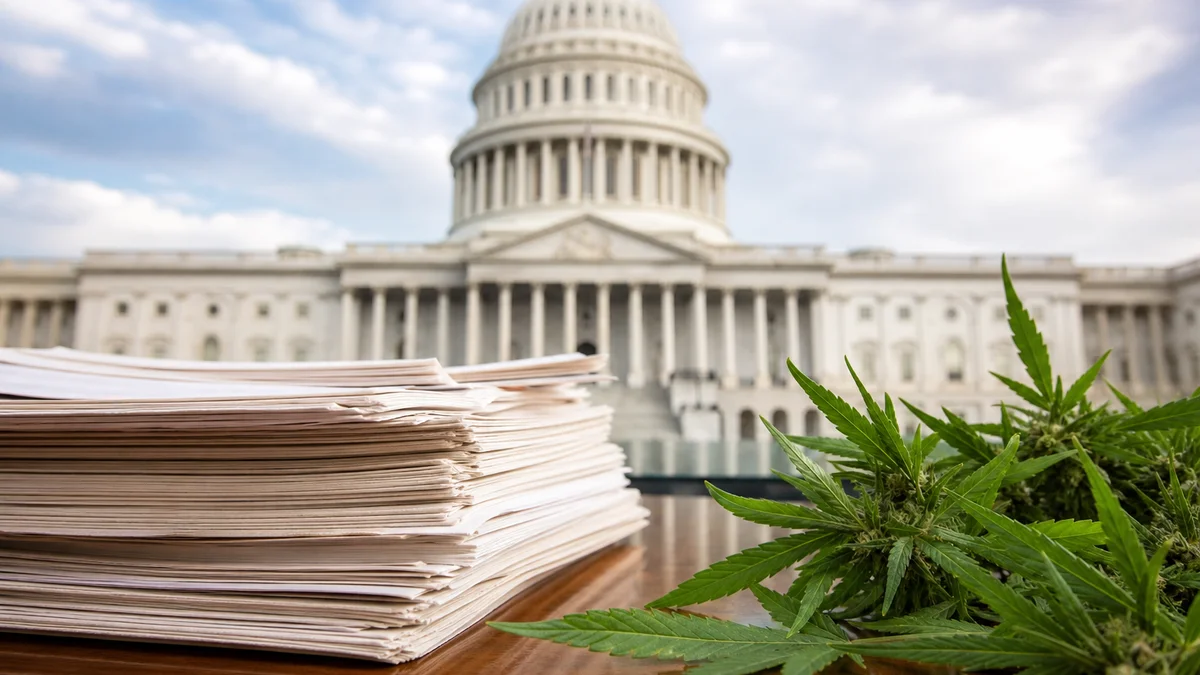
The House voted Thursday to postpone a federal ban on hemp-derived THC products that was set to take effect in November, sending the measure to President Trump's desk.
The bill, which passed the Senate earlier this month, pushes back the prohibition deadline while lawmakers work on a regulatory framework for the booming hemp THC market. The delay gives Congress additional months to craft rules governing products like delta-8 THC, delta-9 gummies, and other hemp-derived intoxicants that have flooded gas stations and convenience stores nationwide.
The vote comes as the hemp industry faces an uncertain future. Current law allows hemp products with less than 0.3% delta-9 THC by dry weight, but the Drug Enforcement Administration announced plans to recriminalize many hemp-derived cannabinoids this fall. Industry groups warned the ban would wipe out thousands of businesses and eliminate jobs across the hemp supply chain.
The Regulatory Gap
Hemp THC products exist in a legal gray zone created by the 2018 Farm Bill, which legalized hemp but didn't anticipate the explosion of intoxicating products derived from the plant. Manufacturers found ways to extract and concentrate cannabinoids like delta-8 and THCA, creating products that get users high but technically meet the legal definition of hemp.
State responses have varied wildly. Some states banned hemp THC products outright, while others created regulatory systems similar to adult-use cannabis programs. The patchwork of laws has frustrated both industry operators and law enforcement.
The hemp industry argues that outright prohibition ignores consumer demand and pushes sales into unregulated markets. Cannabis industry groups, meanwhile, say unregulated hemp products undercut licensed marijuana businesses that face strict testing and taxation requirements.
What Happens Next
President Trump is expected to sign the delay into law, though the White House has not commented publicly on the measure. The extension gives Congress until mid-2025 to develop regulations, though it's unclear whether lawmakers can reach consensus on standards for testing, labeling, and potency limits.
Several proposals are circulating on Capitol Hill. Some would cap THC content in hemp products at specific milligram amounts per serving. Others would require lab testing similar to state cannabis programs, or restrict sales to licensed retailers instead of gas stations and convenience stores.
But the hemp and cannabis industries remain divided on what regulations should look like. Hemp manufacturers want to preserve market access with minimal restrictions, while state-licensed cannabis operators push for rules that level the playing field—or eliminate hemp THC products entirely.
The delay also creates uncertainty for retailers carrying hemp THC inventory. Some may continue stocking products, while others might pull items from shelves to avoid potential legal exposure if Congress fails to act before the new deadline.
Industry advocates say the vote shows lawmakers recognize that prohibition is not a workable solution for a market generating billions in annual sales. Whether Congress can deliver a regulatory framework before the extended deadline remains an open question.
This article is based on original reporting by www.marijuanamoment.net.