

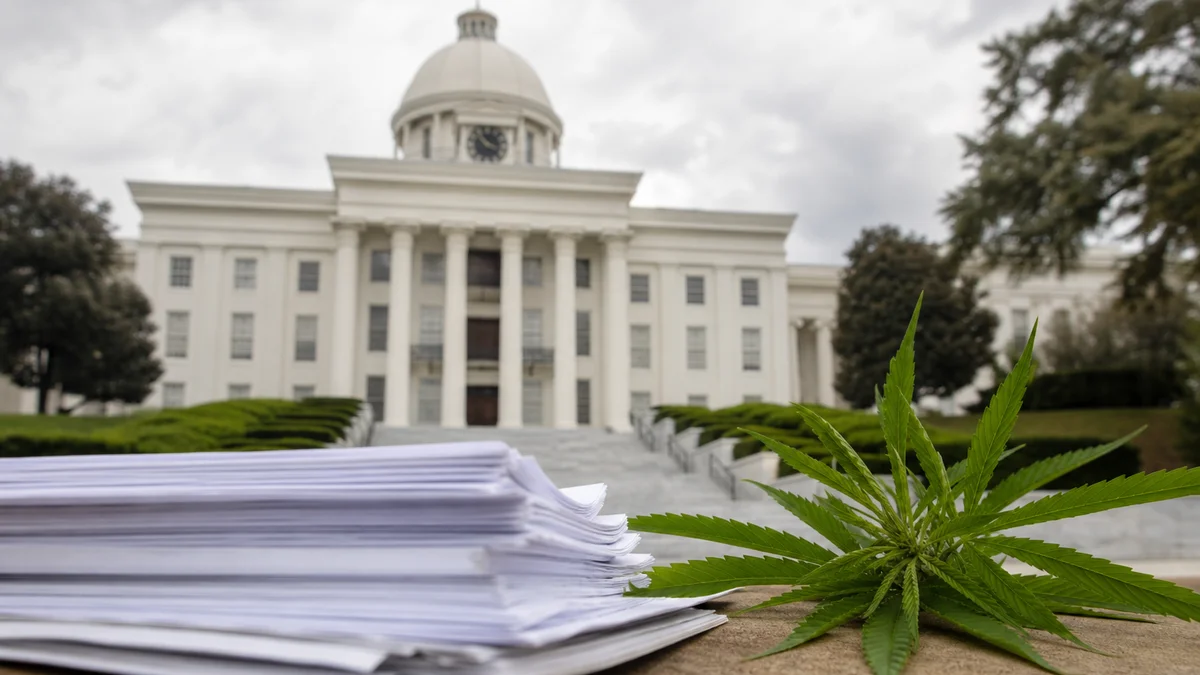
Alabama's public health officials withdrew their objection to rescheduling marijuana under state law Thursday, aligning the state's regulatory framework with the Trump administration's federal reclassification efforts.
The Alabama Department of Public Health (ADPH) governing body voted to reverse its previous stance during a procedural meeting, months after a July public hearing where officials first raised concerns about moving cannabis from Schedule I to Schedule III under state statutes.
"The program's already live, even though it's still Schedule I in Alabama," said Anna Barrett of the Alabama Reflector, referencing the state's medical cannabis program that began operations despite the scheduling conflict.
The Timing
The withdrawal comes as the Drug Enforcement Administration moves forward with federal rescheduling under directives from President Trump's administration. Alabama's state scheduling typically mirrors federal classifications, creating a regulatory mismatch when state officials initially objected to the change.
Alabama launched its medical marijuana program in 2023, issuing licenses to cultivators, processors, and dispensaries even while cannabis remained a Schedule I controlled substance at both state and federal levels. That created an unusual legal gray area where a functioning medical program operated under the most restrictive drug classification.
The ADPH board characterized Thursday's vote as procedural rather than substantive, suggesting the objection was always intended as temporary pending federal action.
Industry Impact
For Alabama's nascent cannabis industry, the scheduling change removes a potential compliance headache. Schedule III classification affects everything from banking access to tax treatment under IRS Code 280E, which prohibits business deductions for Schedule I and II substances.
Medical cannabis operators in Alabama have been navigating the same federal banking restrictions and tax burdens as operators in other states, despite running a state-sanctioned program. The rescheduling won't solve all those problems immediately, but it opens doors to more conventional business operations.
The state issued its first medical cannabis licenses in 2023, with dispensaries beginning sales later that year. Qualifying conditions include chronic pain, PTSD, anxiety disorders, and terminal illnesses. Smokable flower remains prohibited under Alabama's program, limiting sales to oils, capsules, and other processed forms.
What Happens Next
Alabama's withdrawal of its objection doesn't automatically reschedule marijuana under state law. The state will need to update its controlled substances schedules through administrative rulemaking, a process that typically takes several months.
But the ADPH board's reversal signals that Alabama won't fight the rescheduling process. That's significant given that some states have maintained stricter classifications than federal law in other contexts.
The federal rescheduling process itself remains in flux. The DEA has proposed moving marijuana to Schedule III, but the agency hasn't finalized that rule. Public comment periods and potential legal challenges could extend the timeline.
For now, Alabama's medical cannabis operators continue business as usual, operating under state licenses while technically selling a Schedule I substance. Once both federal and state rescheduling complete, the industry expects easier access to banking services, lower tax burdens, and potentially expanded research opportunities.
The ADPH board meets quarterly, with the next session scheduled for later this spring. Officials haven't indicated when they'll formally update state scheduling to match federal changes.
This article is based on original reporting by www.marijuanamoment.net.