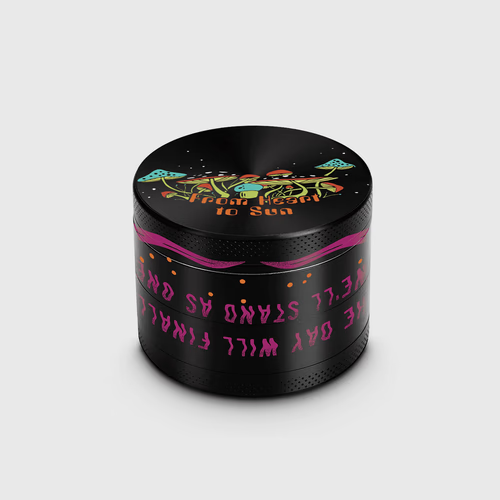
Kief Catcher Guide: 4-Piece Grinder Value Explained
Four-piece grinders with kief catchers make up 60-70% of premium grinder sales — and for good reason. But a lot of customers still don't understand how kief collection actually works, which makes it hard to justify the 40-60% price premium over a basic 2-piece. If your staff can explain the mechanics clearly, the sale is usually straightforward. If they can't, customers default to the cheapest option.
This guide covers how kief catchers work, what screen specs actually matter, how to set realistic expectations with customers, and how to handle the most common complaints. For a broader look at grinder options, see our Premium Grinders: Complete 2026 Guide.
How Kief Catchers Actually Work
Cannabis trichomes sit on top of small stalks — the bulbous glands at the tip are where the cannabinoids and terpenes concentrate. When you grind flower, those heads break off the stalks and become loose particulates. A kief screen is sized to let those heads fall through while keeping larger plant material above.
The standard mesh range for kief screens is 80-120 lines per inch (LPI), which translates to roughly 150-200 micron openings. Trichome heads are typically 50-100 microns, so they pass through. Go finer than 150 LPI and the screen clogs constantly. Go coarser than 60 LPI and you're letting plant dust through, which contaminates what you're collecting.
The reason three-piece grinders with screens underperform: every time you open the chamber to access ground flower, you disturb the kief that's collected. Four-piece designs solve this by giving kief its own isolated chamber below the screen. That separation is what makes long-term accumulation actually work.
Collection also depends on material movement. Kief falls through the screen as ground flower shifts around — each shake or tap dislodges more trichome heads. Grinders with smooth interiors and well-proportioned chambers move material more efficiently than ones where ground flower packs into a static pile.
The Value Case for 4-Piece Grinders
The honest pitch isn't "it collects kief." It's "all that sticky residue coating your old grinder is kief you're throwing away." A four-piece grinder captures 70-85% of those broken trichomes instead.
For someone grinding a gram a day, that's roughly 0.1-0.15 grams of kief per week — 5-7 grams a month. At typical retail, that's $30-50 in recovered material monthly. A $50 grinder pays for itself in two months, then keeps producing. That framing converts a lot of price-sensitive customers once they do the math.
The potency angle is worth explaining too. Separated kief typically runs 40-60% THC versus 15-25% in the flower it came from. Customers can top bowls or joints with material they already paid for, instead of buying concentrates separately. It's not a pitch — it's just what the product does.
There's also a maintenance argument. When trichomes fall into a dedicated collection chamber instead of coating threads and walls, the grinder stays workable longer between cleanings. A good 4-piece can go 3-4 weeks between cleanings for a daily user. A 2-piece accumulates sticky buildup everywhere and needs attention weekly.
Screen Specs That Actually Matter
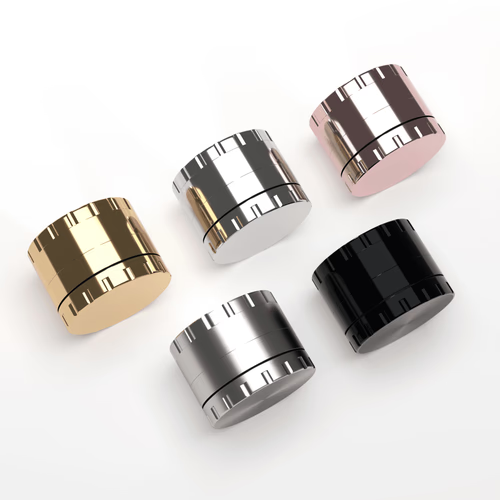
Screen quality is where a lot of budget grinders fall apart, and it's not always obvious until a customer has used the product for a few months. A few things to check when evaluating wholesale options:
Material: Stainless steel mesh is the baseline for anything worth stocking. Aluminum screens bend and degrade. Synthetic or nylon screens stretch over time, which enlarges the openings and lets plant material contaminate the kief. If a supplier can't confirm metal mesh construction, pass.
Tension: The screen needs to be stretched flat and held firmly — compression ring or adhesive mounting, not just pressed in loosely. Wrinkles or visible give when you press the center are red flags. Loose screens don't filter properly and tend to fail faster.
Uniformity: Premium screens have consistent opening sizes across the full mesh area. Budget screens often have irregular manufacturing that creates uneven separation — some areas work fine, others let plant material through. You need magnification to verify this yourself, which is why buying from suppliers who document their mesh specs is worth the extra effort.
Replaceability: Higher-end grinders increasingly use replaceable screens. A $5-10 replacement screen extends a $50 grinder's useful life considerably, versus replacing the whole unit when the screen degrades. Stocking replacement screens for your top-selling grinder brands creates recurring accessory revenue and gives customers a reason to come back. Worth mentioning at the point of sale.
For a comparison of body materials, see our Grinder Materials: Aluminum vs Titanium vs Steel Guide.
Why Customers Get Poor Kief Collection (And What to Tell Them)
Most kief complaints aren't grinder defects — they're technique and expectation problems. Staff who can diagnose these quickly build trust and cut down on returns.
Not enough material processed: This is the most common issue by far. Customers grind 2-3 grams, look at the empty kief chamber, and think the grinder is broken. Meaningful accumulation requires processing 10-15 grams minimum. New customers need to hear this upfront: wait two weeks before judging collection performance.
Flower moisture: Optimal kief separation happens at 10-12% moisture content. Over-dried flower (below 8%) crumbles into fine plant dust that passes through the screen and contaminates kief. Over-moist flower (above 14%) makes trichome heads stick to plant material instead of separating. If a customer complains about dirty or minimal kief, ask about their flower first.
Over-grinding: More rotations don't mean more kief. Over-processing pulverizes plant material into particles fine enough to pass through the screen and can actually damage trichome heads. Medium consistency is the target — once the material is ready to use, stop grinding.
Strain variation: Trichome production varies a lot between cultivars. Some strains produce abundant, easily-separated trichome heads; others produce fewer and smaller ones. A customer switching from a heavy-trichome strain to a leaner one will notice the difference. This isn't a grinder problem.
To improve yield: After grinding, gently tap or shake the grinder to move material across the screen. Some users put a small coin in the middle chamber for the same effect. This active agitation meaningfully improves collection compared to just letting the grinder sit.
Grinder Sizing and Kief Chamber Capacity
Kief collection efficiency scales with screen surface area, which scales with grinder diameter. Getting this match right matters for customer satisfaction.
Small models (1.5-2 inch) are portable but have limited screen area and shallow kief chambers. They're fine for occasional users or travel use, but daily consumers will find themselves emptying the chamber constantly and collecting less overall. Position these as backup or travel grinders, not primary daily drivers.
Medium models (2-2.5 inch) are the right choice for most customers. Adequate screen area, reasonable chamber depth, practical size. These handle 2-4 grams per session and produce visible kief accumulation after 10-15 grams processed. Stock the majority of your custom grinder selection in this range.
Large models (2.75 inch and up) are for heavy daily users who want to minimize how often they empty and want maximum collection volume per session. Size becomes a real factor — these don't pocket easily. Consider large-format options like big capacity grinders for customers who explicitly want maximum output and don't care about portability.
One thing worth checking regardless of diameter: kief chamber depth. Some manufacturers make deeper chambers within a standard diameter, which meaningfully increases capacity. Two grinders that look the same size can have substantially different kief storage volume.
Material Construction and Kief Purity
Body material affects more than durability — it affects what ends up in the kief chamber.
Anodized aluminum is the standard for mid-range grinders. Anodization creates a hard, smooth surface that doesn't shed particles and resists oxidation. Raw, unanodized aluminum interiors can shed microscopic particles that mix with collected kief. Always verify anodized construction when evaluating suppliers — this is a basic quality indicator.
Medical-grade stainless steel is fully inert. No oxidation, no particle shedding, no metallic taste risk. For customers who plan heavy use over multiple years, or who are particular about purity, steel justifies the premium. It also holds up better than aluminum under hard daily use — surface wear that eventually creates metal dust in aluminum isn't a factor.
Magnetic lids maintain a better chamber seal than threads alone. Thread fit degrades over time, which can allow kief to migrate between chambers or escape during transport. Magnets don't wear the same way and keep the seal consistent throughout the grinder's life. It's a small detail, but worth pointing out when customers are comparing options at similar price points.
Diagnosing Common Problems
Green or contaminated kief: Usually means over-grinding (plant dust fine enough to pass through the screen) or a damaged screen with stretched openings. Ask about grinding technique first. If they describe 20+ rotation cycles, that's the problem. If technique seems normal, inspect the screen for tears, stretching, or loose edges. Budget grinders often develop this within months; quality screens hold up for a year or more of daily use.
Screen clogging: Normal accumulation of fine material gradually blocks mesh openings. Quarterly cleaning with isopropyl alcohol and a soft brush restores performance. This is maintenance, not a defect. Customers who don't know to do this will eventually complain about declining collection efficiency. Brief them at the point of sale, and stock cleaning brushes as accessories.
Kief sticking to chamber walls: Usually static electricity or moisture condensation. Fixes: don't store grinders in extremely dry conditions (increases static), let cold grinders reach room temperature before opening (condensation from cold metal creates sticking), use a small scoop instead of fingers (skin moisture makes it worse). Small silicone or metal scoops solve this cleanly and are easy to sell alongside grinders.
Merchandising for Premium Conversion
Stocking 4-piece grinders isn't enough — placement and presentation matter for moving customers up from basic models.
Side-by-side displays with clear signage explaining what each chamber type does convert passive browsers into informed buyers. A lot of customers examining 2-piece grinders genuinely don't know kief catchers exist or what they do. Simple educational signage does a lot of the selling work without requiring staff intervention every time.
Value calculation signage works well: "Daily users typically recover 5-7 grams of kief monthly — $30-50 in value. This grinder pays for itself in 60-90 days." Framing the price difference as a short payback period removes the perceived risk of spending more upfront.
Bundles increase transaction size and improve outcomes: pair a 4-piece grinder with a small scoop, a rolling tray, and a storage container. Include a simple instruction card explaining kief collection technique. Customers who know how to use the product correctly are less likely to return it and more likely to recommend it.
Staff Scripts for Common Objections
These aren't meant to be read verbatim — they're starting points for staff to adapt to their own voice.
"I just need a basic grinder": "Sure — the basic options work fine. Just worth knowing: this 4-piece catches trichomes that normally end up as sticky buildup inside a grinder. Daily users typically recover 5-7 grams of kief a month, which at retail is $30-50. The grinder pays for itself in a couple months, then keeps producing. It also stays cleaner longer. If you want, I can show you how the chambers work."
"Is the kief actually worth anything?": "Kief runs 40-60% THC versus 15-25% in regular flower. You can top bowls or joints with it, or use it on its own. It's concentrate from material you're already paying for — you're just capturing it instead of leaving it stuck to grinder walls. Most people who switch to a 4-piece won't go back."
"It's more than I want to spend": "Completely fair. The $25 option is solid and will do the job. The $45 four-piece costs $20 more upfront but you're recovering $30-50 in kief every month — so over a few months, it comes out ahead. That said, if $25 is the budget, we've got good options there too and I'll make sure you get a quality one."
"I want the best one you have": "For maximum kief collection, you want a larger diameter — more screen surface area means faster accumulation. This model uses aircraft-grade aluminum with a stainless steel mesh screen that holds up without stretching. The chamber depth is solid for extended accumulation without frequent emptying. Customers who grind daily for years tend to stick with this range — it outlasts cheaper grinders by a wide margin."
Maintenance for Long-Term Performance
Clean the screen every 4-8 weeks depending on how often the grinder gets used. Isopropyl alcohol soak for 20 minutes, soft brush agitation, rinse, dry completely before reassembling. Skipping this leads to gradual clogging that compounds — once a screen is packed with compacted plant material, it's much harder to restore than one cleaned on a regular schedule.
Empty the kief chamber every 2-4 weeks for daily users. Kief left to accumulate too long compacts into a dense puck at the bottom that's difficult to remove cleanly. Regular emptying into a storage container keeps the material loose and usable. A small funnel makes transfer clean and prevents loss.
Clean threads every 3-4 weeks with a cotton swab and isopropyl alcohol. Residue buildup in threading makes grinders harder to open and contributes to wear. A light application of food-grade oil on the threads every couple of months keeps operation smooth.
Plan for screen replacement after 12-24 months of heavy use. Signs it's time: persistent clogging despite cleaning, visible tears or holes, loose screen edges. Stocking replacement screens for your top-selling brands creates repeat business and gives customers a reason to maintain the original purchase instead of walking away from the brand entirely when one component fails.
Summary
Four-piece grinders with kief catchers are genuinely better products for most customers — the kief recovery alone makes the price premium rational for any regular user. The challenge is that customers don't always know this before they hit the price tag. Staff who can explain the mechanics in plain terms, set realistic expectations around collection timelines, and diagnose the common problems when they come up will close more premium sales and generate fewer returns.
The key points to internalize: 80-120 LPI stainless steel mesh, anodized interiors, magnetic lid seals, and regular screen cleaning. Get the screen spec right when buying wholesale, explain the value calculation honestly at the counter, and the 4-piece sale typically closes itself.
Browse MunchMakers' 4-piece grinder catalog — precision stainless steel screens, quality construction, and custom branding for dispensaries.